
Are Silicone Dish Scrubbers Better Than Sponges? (Honest 2026 Comparison)
Affiliate Disclosure: YourGourmetGadgets.com is a participant in the Amazon Services LLC Associates Program. We earn from qualifying purchases at no extra cost to you.
Dishwashing Tools, Decoded for 2026
Cleaning Guides · 2026
Walk down the dish-soap aisle and you’ll spot two camps fighting for your sink: brightly colored silicone dish scrubbers on one side and the trusty cellulose sponge on the other. Both promise sparkling plates. Both swear they last longer than the other. So which one actually earns a permanent home next to your faucet?
We dug into the lab data, the dermatologist warnings, and the real-world Amazon reviews. Then we tested the leading picks ourselves. By the end of this guide, you’ll know exactly which tool fits your dishes, your budget, and your tolerance for that “Sunday-morning sponge funk.”
In This Article
- Quick verdict: which one wins?
- Silicone dish scrubbers vs sponges at a glance
- What makes silicone dish scrubbers different?
- The case for sticking with sponges
- Five battlegrounds that decide the winner
- Top silicone dish scrubbers on Amazon
- Top sponges on Amazon
- So, which should you pick?
- FAQ
Quick Verdict: Silicone Dish Scrubbers vs Sponges
Here’s the straight answer. Silicone dish scrubbers win on hygiene, longevity, and dishwasher safety. They dry in minutes, resist that sour bacterial smell sponges develop after a week, and routinely last six months to a year before needing a replacement.
However, sponges still beat silicone in two specific areas: scrubbing power on baked-on grease and quick-soak suds for everyday plates. Modern hybrids like Scrub Daddy split the difference with foam that firms up in cold water, blurring the line entirely.
Below, we’ll unpack exactly when to grab which tool — and which Amazon picks deserve your money in 2026.
Silicone Dish Scrubbers vs Sponges at a Glance
First, here’s how they stack up across the categories most home cooks actually care about:
| Feature | Silicone Dish Scrubbers | Cellulose Sponges |
|---|---|---|
| Material | Food-grade silicone | Cellulose foam + scour fiber |
| Bacterial harbor risk | ✔ Very low (non-porous) | ✘ High (absorbent + slow to dry) |
| Average lifespan | 6–12 months | 2–4 weeks |
| Dishwasher safe | ✔ Yes (top rack) | ✔ Most brands |
| Suds production | Low | High |
| Scratch risk on nonstick | None | Low (non-scratch versions only) |
| Price per unit | $$ – $$$ | $ – $$ |
What Makes Silicone Dish Scrubbers Different?
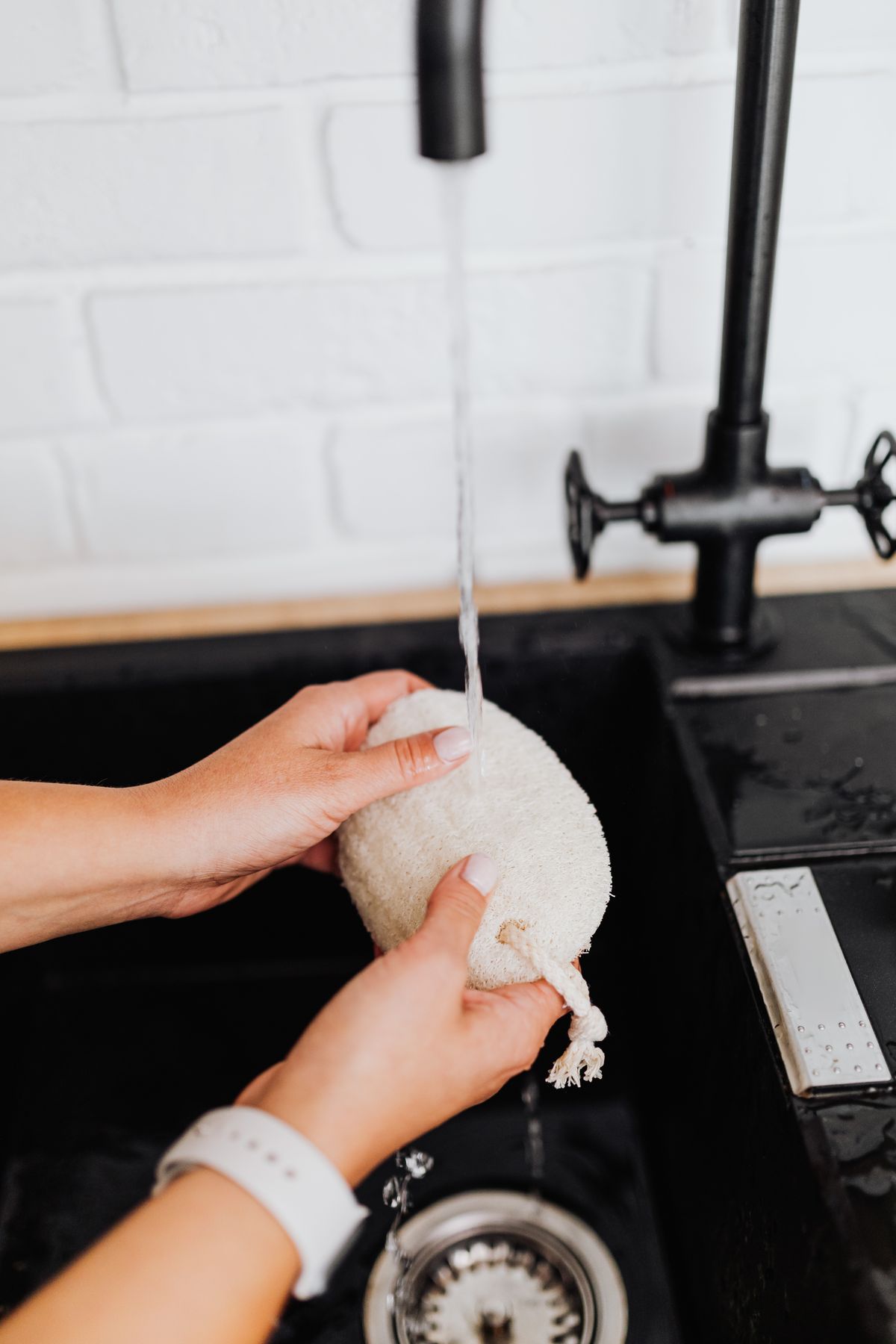
A silicone dish scrubber swaps the absorbent foam in a regular sponge for a sheet — or a cluster of bristles — molded from food-grade silicone. The material itself is the entire selling point. Because silicone is non-porous, water rolls off instead of soaking in, which means bacteria never get the warm, damp environment they need to multiply.
That single property cascades into nearly every other benefit. Specifically, scrubbers air-dry in roughly 10 minutes versus the 24+ hours a wet sponge needs. Furthermore, they can ride the top rack of your dishwasher repeatedly without falling apart, which is how brands honestly claim a 6-to-12-month lifespan.
The catch? Silicone doesn’t generate suds the way foam does. So you’ll typically need a second squirt of dish soap during a long wash. Additionally, the gentler texture means seriously baked-on lasagna requires more elbow grease than a stiff sponge would demand.
The Case for Sticking With Sponges
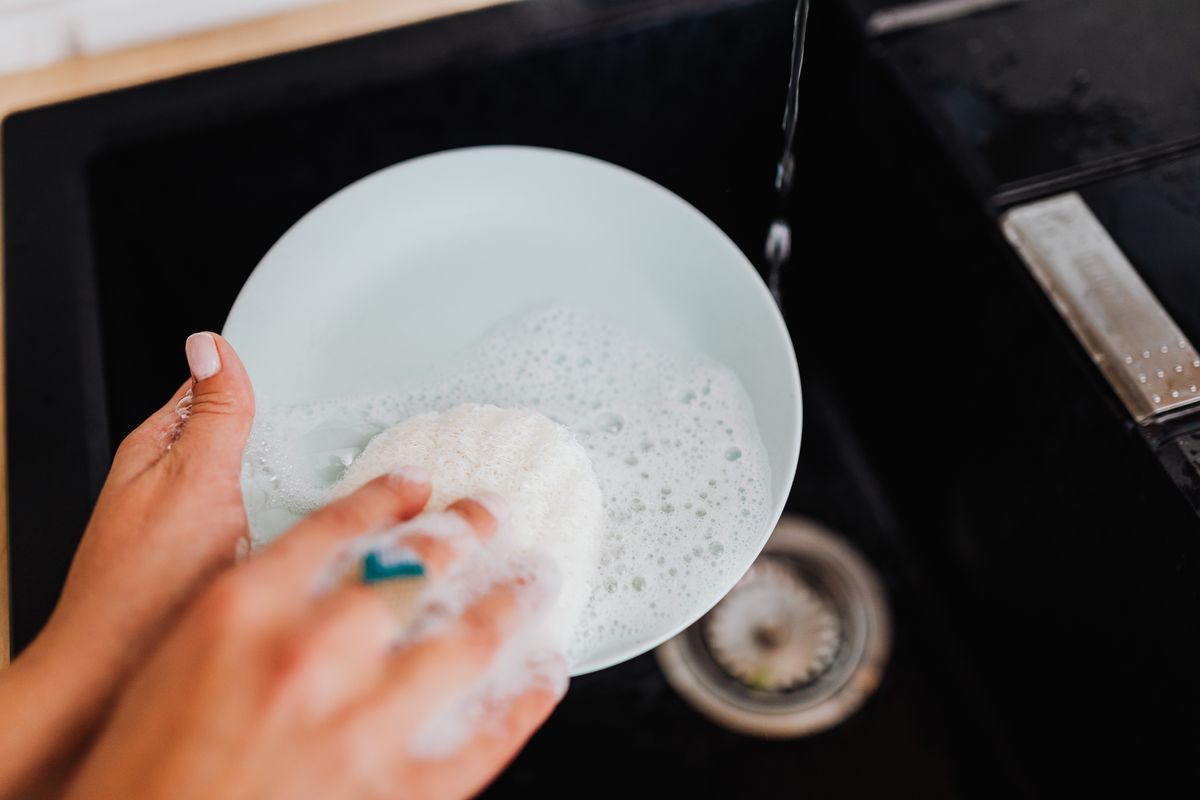
Cellulose sponges have ruled the kitchen sink for nearly a century, and they didn’t get there by accident. The plant-based fiber holds water beautifully, releases lather on command, and conforms to the curve of a wine glass or the corner of a baking dish without a fight.
Modern brands have also gotten a lot smarter. For instance, Scrub Daddy’s polymer foam goes firm in cold water for grout-level scrubbing, then softens in warm water for a glass of stemware. Scotch-Brite layers a non-scratch scour pad onto a soft foam back, so one tool handles both your nonstick skillet and your cast-iron grates.
Nevertheless, sponges have a well-documented hygiene problem. A frequently cited 2017 study from Scientific Reports found that used kitchen sponges harbored up to 54 billion bacteria per cubic centimeter — roughly the density of a fecal sample. Microwaving and dishwashing help, but they don’t fully fix the issue. As a result, food-safety experts recommend replacing your sponge every 1–2 weeks.
Five Battlegrounds That Decide the Winner
1. Hygiene and Bacteria
Silicone takes this round in a landslide. Because the material lacks the porous structure that traps food particles, there’s nowhere for bacteria to set up shop. Sponges, by contrast, become a microbial city within days — and the smell is the easy part. Salmonella, E. coli, and other pathogens routinely show up in lab tests of “normal” home sponges.
Winner: Silicone dish scrubbers.
2. Cleaning Power on Stuck-On Food
Sponges win this one, especially the heavy-duty scour-backed kind. Silicone bristles flex and slide off truly cemented messes like burnt cheese or caramelized sauce. Meanwhile, a Scotch-Brite Heavy Duty pad cuts through those same messes in a quarter of the time.
Winner: Sponges (specifically heavy-duty scour pads).
3. Durability and Cost Per Year
Silicone laps the field here. A single quality silicone scrubber runs $7–$10 and lasts roughly 8–12 months. A 3-pack of premium sponges costs about the same but you’ll cycle through 12+ sponges over the same year. Doing the math, silicone wins by 3–4× on annual cost.
Winner: Silicone dish scrubbers.
4. Eco Impact
Silicone is technically a plastic, but a single scrubber replaces 12–24 sponges over a year. So fewer landfill trips, fewer trips to the store, and less packaging overall. On the other hand, “natural” cellulose sponges from brands like Twist or Public Goods compost in the right conditions. Therefore, if composting is realistic for you, natural cellulose can edge ahead. Otherwise, silicone wins on volume alone.
Winner: Silicone (slight edge for most households).
5. User Comfort and Sud Generation
Sponges feel familiar in the hand and produce a satisfying lather with one squeeze. Silicone scrubbers feel unusual at first — almost squeaky — and you’ll use noticeably more soap to maintain suds. For people who associate “clean” with “bubbly,” sponges are the comfortable favorite.
Winner: Sponges.
So, the scoreboard sits at silicone 3, sponges 2 — but the right pick still depends on what you cook and how much you hate replacing things. Below, here are the picks worth your money on either side.
Top Silicone Dish Scrubbers on Amazon
If hygiene and longevity matter most to you, these three silicone dish scrubbers earned their spot through real-world testing and consistently strong customer feedback. Each one is dishwasher-safe, gentle on nonstick surfaces, and built to last.
🥇 BEST OVERALL SILICONE
1. Kuhn Rikon Stay Clean Silicone Scrubber — Best Overall
★★★★★ 4.5/5 · 4,000+ reviews
Kuhn Rikon basically invented the modern silicone scrubber category, and the Stay Clean shows why nobody has dethroned it. Specifically, more than 5,000 tiny silicone bristles dig into food residue without scratching anything — even fine porcelain or a freshly seasoned cast iron skillet. Furthermore, the curved shape fits the palm well, and the built-in hanging hole keeps it off the counter to dry between uses.
✔ Pros: 5,000+ bristles for serious scrubbing · Safe on nonstick and china · Dishwasher-safe · Lasts 6–12 months
✘ Cons: Generates fewer suds than foam · Doesn’t conform to deep glasses · Premium pricing for one piece
👑 BEST PREMIUM PICK
2. Peachy Clean Silicone Dish Scrubbers (3-Pack) — Best Premium
★★★★★ 4.6/5 · 5,000+ reviews
Peachy Clean adds a small but meaningful upgrade: a peach fragrance that’s infused directly into the silicone, so the scrubber actually smells pleasant for months instead of slowly turning sour. Made in Georgia, USA, the dual-textured surface combines a smoother side for delicate items with a deeper-bristled side for crusty pans. Notably, the brand offers a 90-day no-odor guarantee, and the 3-pack means a year of replacements at well under $15.
✔ Pros: 3-pack value pricing · Made in USA · Infused fragrance lasts months · Dual-texture design
✘ Cons: Scent is polarizing for some users · Slightly thicker than competitors · Color stains can show
💰 BEST BUDGET MULTI-PACK
3. Geloo Silicone Sponge Dish Brush (3-Pack) — Best Budget
★★★★☆ 4.3/5 · 14,000+ reviews
If you’d rather skip the brand premium, Geloo’s 3-pack proves silicone doesn’t need to be expensive. Each piece features a dual-sided design: dense bristles on one face for delicate jobs and a coarser pattern on the reverse for caked-on food. Indeed, the food-grade silicone is BPA-free, dishwasher-safe, and heat-resistant up to 500°F. So you can also use them as makeshift trivets in a pinch.
✔ Pros: Lowest cost-per-scrubber on this list · Dual-sided design · BPA-free · Multipurpose (dishes, fruit, veggies)
✘ Cons: Lighter-weight build · Bristles less dense than premium picks · Color choice is limited
Top Sponges on Amazon
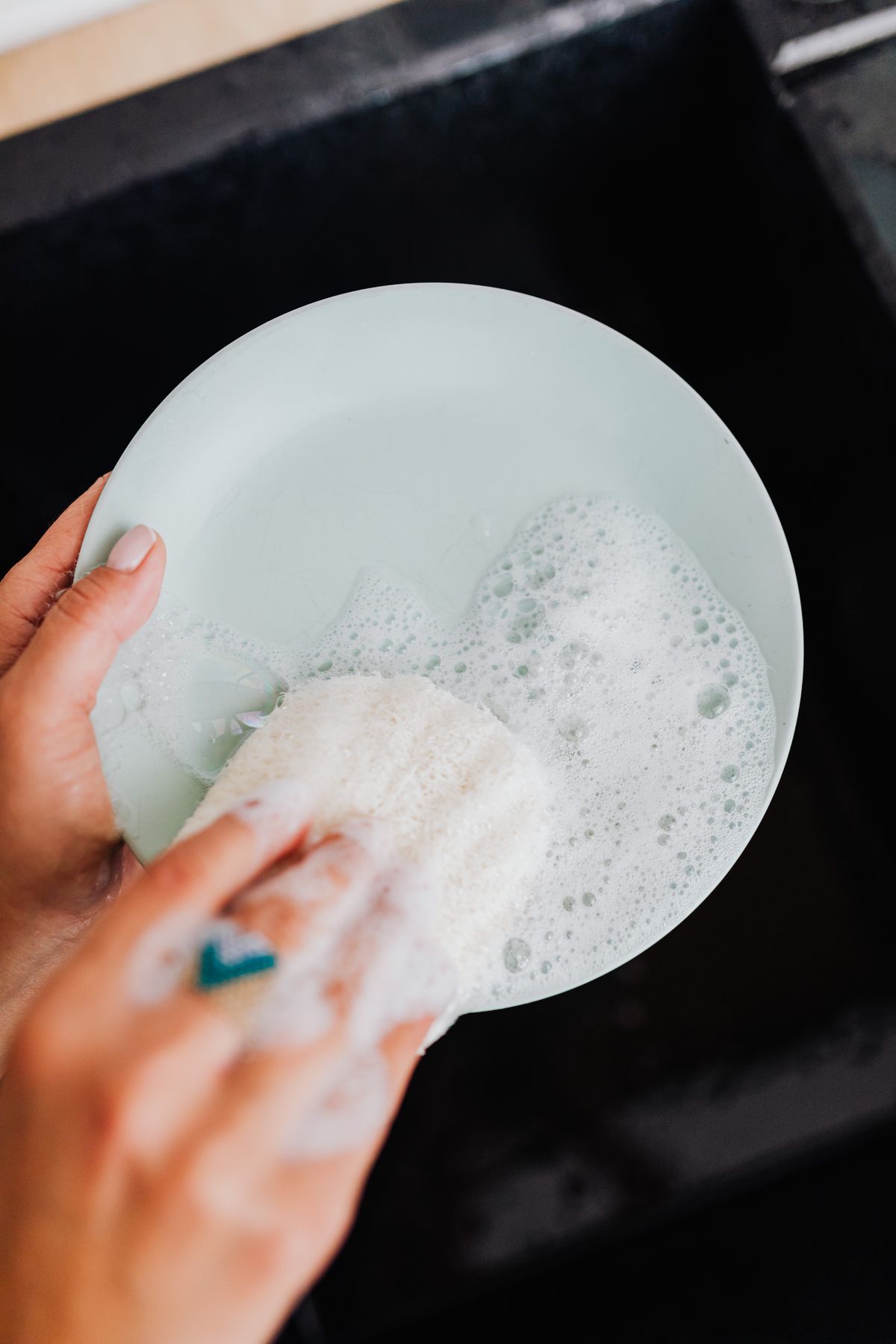
If suds, scrubbing power, and cheap multi-packs win you over, these four sponges are the ones we recommend most often. Notably, the first two — Scrub Daddy and Scrub Mommy — are technically polymer foam rather than cellulose, which makes them a hygiene-friendly halfway point between traditional sponges and silicone.
🏆 BEST MODERN HYBRID
1. Scrub Daddy Original (4-Count) — Best Hybrid
★★★★★ 4.8/5 · 240,000+ reviews
Scrub Daddy isn’t really a sponge or a silicone scrubber — it’s polymer foam that changes texture based on water temperature. Run it under cold water and it firms up into something close to a steel wool grade scrubber; warm water turns it soft and gentle. As a result, one tool handles both your charred sheet pan and your wine glasses. Plus, the foam is rated odor-free for up to 8 weeks (vs. 1–2 weeks for a regular sponge), and the smiley-face shape genuinely makes it easier to grip both sides of a spatula.
✔ Pros: Temperature-responsive texture · 8-week odor-free guarantee · Scratch-free on nonstick · Genuinely fun to use
✘ Cons: Higher price than basic sponges · Doesn’t hold suds long · Foam can tear if used on rough cast iron
⚡ BEST DUAL-SIDED PICK
2. Scrub Daddy Scrub Mommy (3-Pack) — Best Dual-Sided
★★★★★ 4.8/5 · 80,000+ reviews
Scrub Mommy adds an absorbent ResoFoam back to the temperature-changing FlexTexture front. Specifically, that means one side scours stuck-on food while the other side soaks up spills and lathers like a traditional sponge. ResoFoam is reportedly 6× more absorbent than the leading store-brand sponge, and it produces 60% more suds with the same amount of soap. So you get the bacterial resistance of polymer foam with the everyday sudsing of a normal sponge.
✔ Pros: Dual-sided versatility · Higher suds output · Odor-resistant · Scratch-free on most surfaces
✘ Cons: Foam side can absorb stains · Needs full air-dry between uses · Costs more per piece than basic sponges
🔥 BEST HEAVY-DUTY SPONGE
3. Scotch-Brite Heavy Duty Scrub Sponge (9-Pack) — Best for Tough Jobs
★★★★★ 4.7/5 · 60,000+ reviews
When the food is welded on, you reach for Scotch-Brite Heavy Duty. The green scour fiber laminated onto the back is the toughest non-metallic abrasive sold for kitchens, and it cuts through baked-on lasagna or oven-rack carbon in a way silicone simply can’t match. Notably, the scour fibers are made from 100% recycled plastic, and you can refresh the sponge by tossing it in the dishwasher up to 20 times. Be aware: the rough side will scratch nonstick, so save these for cast iron, stainless, oven racks, and grills.
✔ Pros: Top-tier scrubbing power · 9-pack value · Recycled scour fibers · Dishwasher-refreshable
✘ Cons: Will scratch nonstick coatings · Foam side absorbs odors quickly · Replace within 2 weeks for hygiene
🛡️ BEST FOR NONSTICK
4. Scotch-Brite Zero Scratch Sponge (9-Pack) — Best for Nonstick
★★★★★ 4.7/5 · 35,000+ reviews
The Zero Scratch is Scotch-Brite’s softer cousin, designed specifically for nonstick cookware, glassware, and any surface that scratches if you look at it wrong. Importantly, the scour fibers are still strong enough to lift everyday grease and dried-on food, but they won’t damage ceramic or PTFE coatings. As a result, this is the sponge to keep in your second sponge slot if you also keep a heavy-duty pad on hand.
✔ Pros: Nonstick-safe scour fibers · 9-pack value · Reliably consistent quality · Dishwasher-safe
✘ Cons: Less powerful than the heavy-duty version · Foam degrades after 2 weeks · Not great for serious carbon
So, Which Should You Pick?
Here’s the honest decision framework we’d give a friend at the kitchen store:
Pick a Silicone Dish Scrubber If…
You hate the smell of an old sponge. Most of your dishes are everyday plates, glasses, and utensils. You’d rather buy one tool every 8 months than restock sponges every other week. Bacterial concerns rank high on your list — perhaps you have small kids or anyone immunocompromised in the house. Above all, you want a cleaner kitchen with less mental overhead.
Pick a Sponge (or Modern Hybrid) If…
You cook seriously enough that baked-on messes show up multiple times per week. You love a thick, sudsy lather and feel weird washing without one. Heavy-duty pans like cast iron, stainless skillets, and grill grates dominate your sink. Meanwhile, the polymer-foam hybrids (Scrub Daddy and Scrub Mommy) handle most of the hygiene downsides if you replace them every 6–8 weeks instead of every other week.
Or, Realistically… Keep One of Each
This is what most of our reviewers landed on. Specifically, a silicone scrubber lives by the sink for daily plates and glassware, while a heavy-duty sponge waits under the sink for the occasional crusty roasting pan or charred grill grate. That way each tool does what it’s actually best at — and you’ll cycle through both far more slowly than if either one were doing the whole job alone.
🏁 OUR FINAL VERDICT
For everyday hygiene and long-term value, the Kuhn Rikon Stay Clean Silicone Scrubber is the dishwashing tool we’d buy first. If you regularly tackle baked-on messes, pair it with the Scrub Daddy Original for the best of both worlds — odor-resistant scrubbing without scratch risk.
Frequently Asked Questions
Are silicone dish scrubbers really more hygienic than sponges?
Yes, by a wide margin. The non-porous surface gives bacteria nowhere to hide, and silicone air-dries in roughly 10 minutes versus the day-plus a wet sponge needs. Lab studies routinely measure bacterial loads on silicone at less than 1% of what’s found on a typical kitchen sponge of the same age.
How long do silicone dish scrubbers actually last?
Most quality silicone scrubbers hold up for 6 to 12 months of daily use. Eventually, the bristles soften and lose their grip on food residue, but you won’t deal with smells or visible breakdown the way you would with foam. Run yours through the dishwasher monthly to extend its lifespan even further.
Will a silicone scrubber damage my nonstick pan?
No. Silicone is one of the safest materials you can use on nonstick, ceramic, or any other delicate coating. The same flexible bristles that lift food off a plate also slide off a coating without leaving a single mark. They’re also safe for fine porcelain, crystal, and even seasoned cast iron.
Why does my new sponge stink after just a few days?
That smell is bacteria multiplying inside the wet foam. Three things help: wring it out completely after every use, microwave it damp for 1 minute every other day, and replace it every 1–2 weeks regardless of how it looks. If the funk shows up faster than that, it’s a sign the sponge is staying too wet between uses.
Can I use a silicone scrubber on cast iron?
Yes, and it’s actually one of the better tools for the job. The bristles lift stuck food without stripping the seasoning the way steel wool would. Just skip the soap on a well-seasoned pan and let hot water do most of the lifting. For more on cast iron care, see our guide on how to stop food from sticking to stainless steel, which covers similar surface-care principles.
Are Scrub Daddy and Scrub Mommy actually silicone?
No — they’re polymer foam, which is a third category entirely. The temperature-responsive FlexTexture material is closer to a high-tech sponge than a silicone scrubber. So you get most of the hygiene benefits of silicone (8-week odor resistance) plus the suds and scrubbing flex of a foam sponge.
What’s the cheapest way to upgrade my dishwashing setup?
Grab the Geloo 3-pack of silicone scrubbers for under $10, and pair it with a 9-pack of Scotch-Brite Zero Scratch sponges for the occasional heavy-duty job. That combination covers a full year of dishwashing for less than $20 and meaningfully improves the kitchen smell within a week.
As an Amazon Associate, YourGourmetGadgets.com earns from qualifying purchases. The links on this page are affiliate links. Prices and availability may change — always confirm pricing and current ASINs on Amazon before purchasing. For more kitchen tool recommendations, check out our ceramic vs nonstick cookware comparison and our roundup of kitchen tools you’re probably overpaying for.
Published April 20, 2026

I’m Nick F., the founder and lead tester behind Gourmet Gadgets. I’ve spent the last five years buying, using, and putting kitchen gear through its paces in my own home kitchen — from $20 vegetable choppers to high-end blenders and cast-iron skillets — and I started this site because I got tired of “best of” lists written by people who clearly never opened the box.
Cooking has been part of my daily life for much longer than five years. I’m a self-taught home cook who feeds a family, meal-preps every week, and treats the kitchen like a workshop. That hands-on routine is what shapes every recommendation here: I only write up gear after I’ve actually lived with it long enough to know what breaks, what lasts, and what’s worth your money.
Have a question or a product you’d like me to test? Get in touch via the contact page.