
We’ve all done it. You’re standing in a fancy kitchen store, picking up a $40 garlic press like it’s the crown jewels, and somewhere in the back of your brain a little voice is whispering, “surely this can’t be ten times better than a $6 one.” Well, that voice is usually right. Overpriced kitchen tools are everywhere, and the frustrating part is that many of the budget alternatives quietly outperform the status-symbol brands once you strip away the marketing gloss.
So we rounded up six of the most overpriced kitchen tools on the market and paired each one with a cheaper Amazon alternative that actually earns its spot on your counter. Some save you $50. One saves you over $600. All of them cook dinner just as well.
⚡ Quick navigation:
Why prices are so inflated •
The 6 swaps •
Price vs. performance table •
When splurging makes sense •
FAQ
Why Kitchen Tool Prices Are So Wildly Inflated
Here’s the uncomfortable truth: brand equity carries a heavy tax. Legacy names like Le Creuset, Vitamix, and Shun built their reputations on genuine quality decades ago. Since then, however, competitors have caught up on materials and engineering while those premium labels have kept raising prices. Meanwhile, social media turned certain kitchen tools into status objects — which means you’re often paying for the color, the logo, and the Instagram appeal rather than measurable performance.
That doesn’t mean premium brands are scams. Rather, it means the gap between “premium” and “good enough for 95% of home cooks” has quietly shrunk to almost nothing. Once you know where to look, you can assemble a serious kitchen for a fraction of what the magazine spreads suggest.
6 Overpriced Kitchen Tools (And the Cheaper Alternatives That Actually Work)
Each swap below pairs a well-known premium pick with a verified budget alternative on Amazon. Crucially, we focused on alternatives that match or beat the expensive version on core performance — not just lookalikes that fall apart after a year.
1. Dutch Oven: Le Creuset vs. Lodge
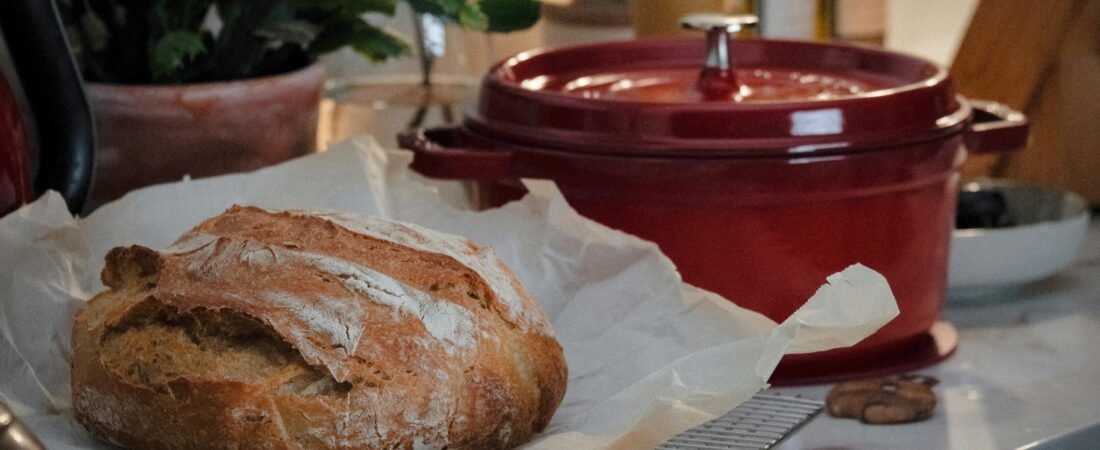
The overpriced pick: Le Creuset Signature Round Dutch Oven (5.5 qt) — routinely hovering around $450 at full retail. Don’t get me wrong, it’s gorgeous and lasts forever. But so does its cheaper cousin.
- Why people pay for it: French heritage, iconic colors, the “someday I’ll inherit one” aura
- What you’re actually getting: Enameled cast iron with excellent heat retention — a material Lodge uses too
- Typical price: $400–$500
🛒 See Le Creuset Price on Amazon
The smarter swap: Lodge 6-Quart Enameled Cast Iron Dutch Oven — often under $80 and made with the same fundamental materials. Honestly, blind cooking tests in both America’s Test Kitchen and Cook’s Illustrated have rated Lodge’s enameled line right alongside Le Creuset on braising performance. It’s heavier-duty in feel, the enamel is chip-resistant, and it’s oven-safe to 500°F just like the premium pick.
- Best for: Braising, bread baking, soups, and stews
- What you give up: The signature French color palette and the “Lodge isn’t as cute on the counter” vibe
- Money saved: Roughly $370
🛒 Get the Lodge Dutch Oven on Amazon →
2. Blender: Vitamix 5200 vs. Ninja Professional Plus
The overpriced pick: Vitamix 5200 — the patriarch of expensive blenders, typically $450–$550. It pulverizes ice, makes hot soup from friction, and has a near-cult following among smoothie devotees. It’s also been wildly over-recommended for people who just want a morning smoothie.
- Why people pay for it: The 7-year warranty, the tamper, and the “chef approved” branding
- What you’re actually getting: A 2 HP motor and a 64-oz container
- Typical price: $450–$550
The smarter swap: Ninja BN701 Professional Plus Blender — usually $100–$120, packs a 1,400-watt motor, and crushes ice into snow. Does it replace a Vitamix for commercial use? No. Will it handle every smoothie, soup, hummus batch, and frozen margarita you’ll ever make at home? Absolutely. Additionally, its Auto-iQ presets do the thinking for you, so you’re not babysitting the blend.
- Best for: Daily smoothies, soups, sauces, frozen drinks, protein shakes
- What you give up: The lifetime-heirloom warranty and the ability to make nut butter from scratch (though it can handle small batches)
- Money saved: Roughly $350
🛒 Grab the Ninja Professional Plus on Amazon →
Still on the fence about blenders? Our complete breakdown of the best blenders for smoothies walks through every power tier so you can match the right motor to your morning routine.
3. Stand Mixer: KitchenAid Artisan vs. Hamilton Beach Eclectrics
The overpriced pick: KitchenAid Artisan Series (5-qt, KSM150PS) — the aspirational appliance of a thousand wedding registries. It’s beautiful, it’s built well, and it comes in 40 colors. However, it’s also $400+ for a machine that, at its core, mixes dough and whips eggs.
- Why people pay for it: Heritage, color options, and the massive attachment ecosystem
- What you’re actually getting: A 325-watt motor and a tilt-head 5-quart bowl
- Typical price: $380–$450
🛒 See KitchenAid Price on Amazon
The smarter swap: Hamilton Beach Electric Stand Mixer (4-qt, 63391) — somewhere in the $80–$100 range with 7 speeds, a dough hook, flat beater, and whisk included. Is the construction as refined? No, not quite. But unless you’re kneading bread dough every weekend, you won’t notice. The splash guard is bigger, the bowl is easier to lift out, and you can replace it twice over and still come out ahead of a single KitchenAid.
- Best for: Casual baking, cookie dough, cake batter, whipped cream, occasional bread
- What you give up: The gorgeous enameled body and the dozens of hub attachments KitchenAid offers separately
- Money saved: Roughly $300
🛒 Check Hamilton Beach Mixer on Amazon →
4. Chef’s Knife: Shun Classic vs. Victorinox Fibrox Pro
The overpriced pick: Shun Classic 8-Inch Chef’s Knife (DM0706) — a gorgeous Japanese knife with a VG-MAX core and 68 layers of Damascus cladding. It’s a genuinely beautiful tool. However, for the average cook who isn’t breaking down whole fish and butterflying chicken thighs at 6 a.m., it’s overkill by a factor of ten.
- Why people pay for it: Hand-forged Japanese craftsmanship and the hypnotic Damascus pattern
- What you’re actually getting: A razor-sharp 16° edge that requires careful hand-washing
- Typical price: $170–$220
🛒 See Shun Classic Price on Amazon
The smarter swap: Victorinox Fibrox Pro 8-Inch Chef’s Knife — typically $45–$60. This is the knife that has topped America’s Test Kitchen‘s ratings for over twenty years, beating knives that cost ten times more. Professional line cooks use it because it’s lightweight, dishwasher-safe (though we don’t recommend it), and holds an edge shockingly well. Furthermore, when it eventually dulls, a $15 replacement doesn’t sting.
- Best for: Everyday chopping, dicing, slicing, mincing — basically 90% of what happens on a cutting board
- What you give up: The aesthetic flex and the slightly finer edge angle
- Money saved: Roughly $120
🛒 Get the Victorinox on Amazon →
Keeping any chef’s knife sharp is half the battle. If yours dulls fast, here’s why your knives lose their edge and how to fix it.
5. Espresso Machine: Breville Barista Express vs. De’Longhi Stilosa
The overpriced pick: Breville Barista Express (BES870XL) — the “starter” prosumer espresso machine at $750+. It has a built-in burr grinder, PID temperature control, and a steam wand that can pull microfoam. For serious home baristas, it’s worth every penny. But for the person who just wants a morning latte? Frankly, it’s massive overkill.
- Why people pay for it: Built-in grinder, 15-bar pump, and genuine third-wave coffee potential
- What you’re actually getting: A semi-auto machine that rewards skill and punishes beginners
- Typical price: $700–$850
🛒 See Breville Price on Amazon
The smarter swap: De’Longhi Stilosa Manual Espresso Machine (EC260BK) — typically $100–$130 with a 15-bar pump and a real steam wand. Look, it won’t win latte art competitions. Nevertheless, paired with a pre-ground espresso you like or a $40 burr grinder, it pulls genuinely respectable shots. That’s a $600+ swing for a machine that covers 85% of what casual espresso drinkers need.
- Best for: Daily lattes and cappuccinos without the learning curve
- What you give up: The built-in grinder, PID temp control, and the “I’m a home barista” energy
- Money saved: Roughly $620
🛒 Grab the De’Longhi Stilosa on Amazon →
Want to get more out of whatever machine you own? Our guide on how to make coffee taste better at home covers grind, water, and ratio tweaks that cost nothing.
6. Food Processor: Cuisinart Custom 14 vs. Hamilton Beach 10-Cup
The overpriced pick: Cuisinart Custom 14 (DFP-14BCNY) — the gold standard food processor at $230–$260. It’s a workhorse, has a massive 14-cup bowl, and has been the chef favorite for decades. That said, it’s also overkill for anyone who’s not meal-prepping for eight people every Sunday.
- Why people pay for it: 720-watt motor, 5-year motor warranty, and restaurant-kitchen reputation
- What you’re actually getting: A large processor with stainless slicing and shredding discs
- Typical price: $230–$260
🛒 See Cuisinart Price on Amazon
The smarter swap: Hamilton Beach 10-Cup Food Processor with Bowl Scraper (70730) — usually $55–$75. The built-in bowl scraper is genuinely a clever feature the Cuisinart lacks, and the 10-cup capacity handles 90% of home recipes. For hummus, pesto, pie dough, shredded cheese, or chopped onions, it produces the same results in the same amount of time. Simply put, unless you’re running a catering operation out of your home, this covers you.
- Best for: Sauces, dips, doughs, shredding, and daily chopping
- What you give up: The 14-cup capacity and the heirloom-level motor durability
- Money saved: Roughly $175
🛒 Get Hamilton Beach Food Processor on Amazon →
Overpriced Kitchen Tools vs. Cheaper Alternatives: The Math
Here’s the full damage in one look. Notably, the total savings across all six swaps tops $1,900 — enough to fund a full kitchen renovation or, honestly, a small vacation.
| Category | Overpriced Pick | Cheaper Swap | You Save |
|---|---|---|---|
| Dutch Oven | Le Creuset 5.5 qt (~$450) | Lodge 6 qt (~$70) | ~$380 |
| Blender | Vitamix 5200 (~$500) | Ninja BN701 (~$120) | ~$380 |
| Stand Mixer | KitchenAid Artisan (~$430) | Hamilton Beach 63391 (~$90) | ~$340 |
| Chef’s Knife | Shun Classic 8″ (~$180) | Victorinox Fibrox (~$50) | ~$130 |
| Espresso Machine | Breville Barista Express (~$750) | De’Longhi Stilosa (~$120) | ~$630 |
| Food Processor | Cuisinart Custom 14 (~$240) | Hamilton Beach 70730 (~$65) | ~$175 |
| TOTAL POTENTIAL SAVINGS | ~$2,035 | ||
When Splurging on Kitchen Tools Actually Makes Sense
Fair warning: this article isn’t a crusade against nice things. In fact, there are genuine scenarios where the premium pick is the right call. Specifically:
- You cook daily and professionally. A line cook absolutely benefits from a Shun edge. A working pastry chef will notice the KitchenAid’s stamina. The premium tools are built for volume.
- You’ve already upgraded the basics. If your knives, boards, and pans are already solid, adding a Le Creuset to the mix is a legitimate flex — go for it.
- You value the aesthetic. Kitchens are social spaces. If a Vitamix on the counter makes you happier every morning, that has real value. Just don’t kid yourself that it’s purely a performance purchase.
- You want resale value. Premium brands hold used-market value. Hamilton Beach and Lodge do not. That’s a factor for some buyers.
Otherwise? The budget alternatives above will cook exactly the same food. Indeed, nobody at your dinner table can taste the difference between bread baked in a Le Creuset and bread baked in a Lodge.
How to Spot Overpriced Kitchen Tools Before You Buy
Learning to identify overpriced kitchen tools is a skill — and it saves you from future impulse buys. Here’s the quick mental checklist we use:
- Compare material specs, not brand names. Enameled cast iron is enameled cast iron. VG-MAX steel is one of many excellent knife steels. Once you compare spec sheets side by side, the logo premium becomes obvious.
- Check what professionals actually use. Restaurant kitchens run Victorinox knives, Robot Coupe processors, and NSF-rated Lodge pans — not the Instagram darlings. Pro kitchens are ruthlessly cost-driven.
- Ignore the color premium. Le Creuset’s “flame” orange isn’t $200 better than Lodge’s storm blue. Color surcharges are pure brand tax.
- Read 3-star reviews, not 5-star ones. Three-star reviewers tell you exactly where the product disappoints. That’s gold when comparing budget vs. premium.
Meanwhile, if you want more low-cost wins that genuinely upgrade how you cook, our roundup of genius cooking tools that save you time is packed with under-$30 picks worth every dollar.
Frequently Asked Questions
Are expensive kitchen tools always better?
No — and that’s the whole point of this guide. Expensive kitchen tools often use materials and engineering that are now standard across the industry. Therefore, the price premium mostly reflects brand heritage, design polish, and marketing budgets. For most home cooks, mid-tier alternatives perform identically.
Which kitchen tools are actually worth splurging on?
A quality chef’s knife (even a $50 one, not $200), a good cutting board, and cast iron are the three areas where spending a bit more genuinely pays off over years of use. Small appliances and single-purpose gadgets almost never justify premium pricing. For the cutting board question specifically, we break it down in our cutting board value guide.
How do I tell if a kitchen tool is overpriced?
Check three things: the actual materials listed on the spec sheet, whether professional kitchens use that brand, and what the next tier down costs. If the premium version uses identical materials and pros don’t use it, you’re paying for branding rather than performance.
Do cheaper kitchen tools last as long as premium ones?
Sometimes, sometimes not — and that’s worth being honest about. A Vitamix will likely outlast a Ninja by years if you use it daily. However, you could replace the Ninja three times and still come out ahead financially. Durability matters most when you use something heavily; it matters far less for the once-a-week crowd.
What’s the single most overpriced kitchen tool right now?
Purely on the math, the Breville Barista Express vs. De’Longhi Stilosa swap saves you the most absolute dollars — over $600. For most casual latte drinkers, that gap is indefensible. The Consumer Reports testing on small appliances consistently backs up this pattern across categories.
The Bottom Line on Overpriced Kitchen Tools
Buying the premium version of every kitchen tool is the most expensive and least necessary upgrade path you can take. Specifically, the six swaps in this guide save you over $2,000 in aggregate — money you could redirect toward better knives, better ingredients, or honestly, just not spend at all.
That said, there’s zero judgment if you want the Le Creuset on your stove or the KitchenAid on your counter. Kitchens are personal, and aesthetics matter. Just go in with eyes open: you’re paying for the brand, the color, and the heritage — not meaningfully better cooking. And once you see the overpriced kitchen tools pattern, you’ll spot it everywhere, from $80 garlic presses to $60 wooden spoons. The money you save goes a long way toward building a kitchen that actually fits how you cook.
📚 More from Gourmet Gadgets:
🍳 Best Cast Iron Skillets for Everyday Cooking
🥘 Ceramic vs. Nonstick Cookware: What to Buy in 2026
🔪 Best Knife Sets for Beginners vs. Pros
📦 Best Leakproof Meal Prep Containers
🛠️ We Tested Amazon’s Best-Selling Kitchen Gadgets
⚠️ Affiliate Disclosure: YourGourmetGadgets.com is a participant in the Amazon Services LLC Associates Program. We earn from qualifying purchases at no extra cost to you. Prices and availability shown are accurate as of April 2026 and may change. We only recommend products we believe offer genuine value.
Published April 19, 2026

I’m Nick F., the founder and lead tester behind Gourmet Gadgets. I’ve spent the last five years buying, using, and putting kitchen gear through its paces in my own home kitchen — from $20 vegetable choppers to high-end blenders and cast-iron skillets — and I started this site because I got tired of “best of” lists written by people who clearly never opened the box.
Cooking has been part of my daily life for much longer than five years. I’m a self-taught home cook who feeds a family, meal-preps every week, and treats the kitchen like a workshop. That hands-on routine is what shapes every recommendation here: I only write up gear after I’ve actually lived with it long enough to know what breaks, what lasts, and what’s worth your money.
Have a question or a product you’d like me to test? Get in touch via the contact page.