
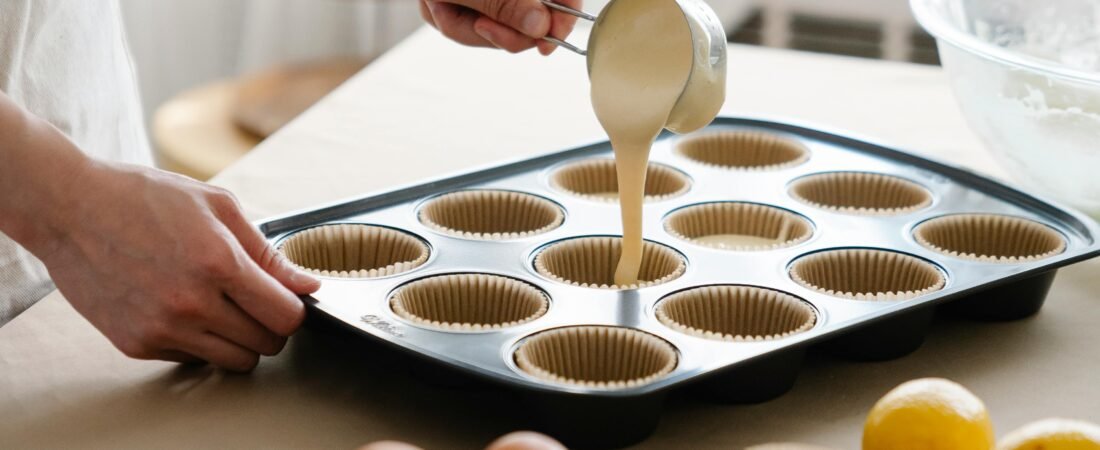
A proper baking station setup turns the messiest hobby in the kitchen into something you actually look forward to. Anyone who has watched flour escape an open bag knows the feeling. So does anyone who has hunted for a measuring spoon mid-recipe. The truth is, the recipe rarely fails you — the workspace does. Build the right zone once, and every cookie, cake, and loaf afterward gets easier.
Below, we’ve assembled eight essentials that turn any stretch of countertop into a real baking station. Each pick anchors a specific zone — mixing, measuring, storage, surface, or cooling. As a result, the whole kit works as a system rather than a pile of single-use gadgets. All eight are available on Amazon as of this writing. Plus, we’ve included direct links so you can compare prices at a glance.
What you’ll find in this guide
The 5 zones every baking station setup needs
Before you buy a single tool, take a step back and think in zones. After all, a great baking station setup follows the same logic as a chef’s mise en place. First, group what belongs together. Second, place it within arm’s reach. Third, stop crisscrossing the kitchen mid-recipe. In short, five zones cover almost everything a home baker does.
Get those five zones right and you’ve already won half the battle. The eight products below were each picked to fill one zone with one workhorse tool. In other words, you’ll actually keep these — not the kind of gear that quietly migrates to a high cabinet after a single use. If you want a wider take on kitchen flow, our guide to kitchen organization products that actually work pairs perfectly with what’s below.
All 8 baking station setup essentials at a glance
Here’s how the full lineup compares — useful if you’re building the station in stages and need to prioritize.
| Product | Zone | Price tier | Priority |
|---|---|---|---|
| KitchenAid Artisan Stand Mixer | Mixing | $$$ | ⭐⭐⭐⭐⭐ |
| OXO 11-lb Stainless Steel Scale | Measuring | $$ | ⭐⭐⭐⭐⭐ |
| OXO POP Baking Container Set | Storage | $$ | ⭐⭐⭐⭐⭐ |
| Pyrex Smart Essentials Bowl Set | Mixing | $$ | ⭐⭐⭐⭐ |
| OXO Measuring Cups & Spoons | Measuring | $ | ⭐⭐⭐⭐ |
| Folksy Silicone Pastry Mat | Surface | $ | ⭐⭐⭐⭐ |
| Joseph Joseph PrecisionPin | Surface | $$ | ⭐⭐⭐ |
| Ultra Cuisine Cooling Rack Set | Cooling | $ | ⭐⭐⭐⭐ |
The 8 must-have baking station setup picks for 2026
Each pick below is paired with the zone it anchors, why we keep coming back to it, and the honest tradeoffs you should know before clicking buy. Together, these eight items form the backbone of a baking station setup you’ll use for years.
1. KitchenAid Artisan 5-Qt Stand Mixer — The Mixing Zone Anchor
5 qt stainless bowl · 325W · 10 speeds · Tilt-head · Includes flat beater, dough hook, wire whip, pouring shield
If your baking station setup has room for one workhorse, make it this. The KitchenAid Artisan Stand Mixer on Amazon creams butter into clouds and kneads enriched doughs without complaint. It also whips egg whites to glossy peaks while you measure the next ingredient. Crucially, its 59-point planetary action means every gram of flour gets pulled into the bowl on each rotation. As a result, no scraping is required halfway through.
What earns it permanent counter real estate, though, is the attachment hub. Slide off the cap and you can run a pasta roller, a meat grinder, or a grain mill from the same motor. Once your station has a stand mixer, the rest of the kitchen quietly downsizes around it. For a side-by-side breakdown of when a handheld will do, our hand mixer vs stand mixer guide walks through the math.
2. OXO Good Grips 11-Pound Stainless Steel Scale — The Measuring Zone Anchor
11 lb / 5 kg capacity · 1 g increments · Pull-out display · Stainless platform · 4 AAA batteries
A digital scale belongs at the center of any serious baking station setup. The OXO 11-Pound Scale on Amazon earns its spot through one clever feature. The display slides forward on a little arm. As a result, a giant mixing bowl can never block your view of the readout. After fighting that exact problem on three other scales, the relief is real.
Beyond the pull-out display, the platform is genuine 304 stainless — smudge-resistant and easy to wipe down. The tare button is also huge enough for floury fingers. Plus, the unit conversion lets you flip between grams and ounces without diving into a menu. Notably, Cook’s Illustrated has recommended this scale for years, which counts for something. If you’re still on the fence about weighing ingredients in general, our honest take on whether you need a kitchen scale goes deeper.
3. OXO POP 8-Piece Baking Essentials Container Set — The Storage Zone Anchor
2 × 4.4 qt + 1 × 1.1 qt + 2 × 0.4 qt containers · Includes brown sugar saver disk and 2 ½-cup scoops · BPA-free · Top-rack dishwasher safe
Open-bag flour goes stale, attracts pests, and explodes when knocked over. The OXO POP 8-Piece Baking Set on Amazon fixes all three at once. The two large 4.4-quart canisters each swallow a 5-pound bag of flour or sugar whole. Meanwhile, the smaller pair holds baking soda and powder. Press the button to engage an airtight seal — the same button doubles as a handle.
What sets this set apart from generic canisters is the included accessory tray. Two half-cup scoops clip to the underside of the lids. There’s also a terracotta brown sugar saver that keeps the brown sugar canister soft for months. The result is a baking station setup where flour and sugar are visible, dated, and ready to scoop in a single motion. For more storage hacks, our best spice organizers guide applies the same logic to herbs and spices.
4. Pyrex Smart Essentials 8-Piece Glass Mixing Bowl Set — Mixing Zone Workhorses
1 qt + 1.5 qt + 2.5 qt + 4 qt glass bowls · Color-coded BPA-free lids · Microwave, oven, freezer, and dishwasher safe
Bowls are the part of a baking station setup that get touched most and thanked least. The Pyrex Smart Essentials 8-Piece Set on Amazon covers the full range. The 1-quart handles melted butter. The 4-quart holds an entire batch of cookie dough. Better still, each bowl comes with a color-coded snap lid for stashing leftovers without dirtying another container.
Glass beats plastic in a baking context for two reasons. First, it doesn’t pick up grease stains. Second, you can melt chocolate or proof yeast water right in the bowl in the microwave. Pyrex has been making these for decades, and the curved lip pours batter cleanly without dribbling down the side. Mind you, the bowls are heavier than stainless. Even so, that’s a feature when whisking — less so when carrying a stack across the kitchen.
5. OXO 8-Piece Stainless Steel Measuring Cups & Spoons — The Quick-Grab Set
¼, ⅓, ½, 1 cup measuring cups · ¼, ½, 1 tsp + 1 tbsp measuring spoons · Magnetic handles · Etched markings · Stainless steel
For ingredients you can’t realistically weigh — vanilla extract, a pinch of salt, a tablespoon of milk — measuring cups and spoons stay in the rotation. The OXO 8-Piece Set on Amazon stands out because of one small detail: magnetic handles. The cups click together. The spoons click together. Then the cup stack clicks to the spoon stack. As a result, the whole assembly hangs from a single hook in your baking station. Nothing rattles around in a drawer.
Etched (rather than printed) markings mean the labels never wear off, even after a thousand dishwasher cycles. In addition, the flat top edges level dry ingredients in a single swipe — a feature pricier brands often skip. Plus, stainless construction won’t react with citrus or hold onto vanilla scent the way plastic does.
6. Folksy Super Kitchen Silicone Pastry Mat — Surface Zone Anchor
28″ × 20″ extra-large · Inch and centimeter scales printed both ways · 0.7 mm thickness · Heat-safe -30°F to 470°F · Dishwasher safe
A great baking station setup needs a surface you can flour without ruining the counter. The Folksy Silicone Pastry Mat on Amazon rolls out to a generous 28 by 20 inches. That’s wide enough for a full pie crust or a sheet of cinnamon-roll dough. Even better, the silicone underside grips countertops so it stays put when you lean into a stiff dough.
Printed measurements run along all four edges in both inches and centimeters. Plus, circle templates help size pizza and pie crusts to spec. Once you finish baking, the whole mat rolls up for easy storage and goes in the dishwasher. After it dries, just slide the rolled mat back onto a shelf. From there, you’ll skip the usual ritual of wiping flour out of countertop crevices.
7. Joseph Joseph PrecisionPin Adjustable Rolling Pin — The Even-Roll Cheat Code
Beech wood · Five sets of removable thickness rings (2, 4, 6, 8, 10 mm) · 17.4″ total length · Inch + centimeter etchings on the body
The single biggest source of unevenly baked cookies isn’t the oven — it’s the rolling pin. Some spots end up thick, some thin. Then the thin ones burn while the thick stay raw. The Joseph Joseph PrecisionPin on Amazon ends that problem with a clever trick. Five color-coded rings snap onto each end of the pin. Each set raises the pin the exact distance off the counter you need.
Want 6 mm sugar cookies? Click on the green rings and roll until the pin won’t go any thinner. Want 2 mm filo or pasta? Swap to the red rings. The pin itself is solid beech with measurement etchings burned into the wood. As a bonus, you can also gauge how wide your dough is spreading. Once your baking station setup includes this pin, “roll it out evenly” stops being aspirational advice.
8. Ultra Cuisine Stainless Steel Cooling Rack Set — The Cooling Zone Anchor
Set of 2 racks · 11.5″ × 16.5″ (fits half-sheet pans) · 100% 304 stainless steel · Tight-wire grid · Oven-safe to 575°F · Dishwasher safe
Cooling matters more than most home bakers realize. Cookies left on a hot pan keep cooking and turn cardboard. Likewise, cakes trapped on a solid surface sweat and tear when you finally flip them. The Ultra Cuisine Cooling Rack Set on Amazon solves both with a tight-wire grid. The grid lifts your bake a full inch off the counter. From there, steam escapes from below.
Better still, the racks are 100% 304 stainless. There’s no chrome plating to flake into your food — the cardinal sin of cheaper cooling racks. Both pieces fit a standard half-sheet pan exactly. As a result, you can elevate proteins for crisp-bottom roasting or rest fried foods after frying. Two racks per order, by the way — useful when an entire batch of cookies comes out at once.
Building a baking station setup in a small kitchen
Not every home has an extra cabinet bay to dedicate to baking. Plenty of us are working with one drawer and a sliver of countertop. Even so, you can build a real baking station setup in a tight space. The trick is to think vertically and pick tools that earn double duty.
First, claim a single shelf inside one cabinet. Then stack the OXO POP canisters on the bottom (heaviest, most used). Next, nest the Pyrex bowls upside down on top to save vertical space. Finally, hang the magnetic OXO measuring set from a 3M hook on the inside of the cabinet door. As a result, that one move alone reclaims a full drawer.
For surface space, the silicone pastry mat rolls up to roughly the size of a paper towel tube. From there, it slides between the fridge and the wall. Meanwhile, the cooling racks live in the oven itself when not in use. As for the stand mixer, if you bake weekly it stays out. If you bake monthly, it lives in a lower cabinet on a slide-out shelf — same principle as a Lazy Susan, just on rails. In short, smart spending on the rest of the kitchen leaves more counter for baking. Our roundup of kitchen tools you’re probably overpaying for walks through what to skip.
Baking station setup FAQ
What’s the minimum I need to start a baking station setup?
Realistically, three things: a digital scale, a mixing bowl set, and at least one large airtight canister for flour. With those alone you can produce most cookies, quick breads, and simple cakes. After that, add measuring cups, a pastry mat, and a cooling rack as your baking habits grow.
Do I really need a stand mixer for a home baking station?
Honestly, not at first. If you bake once or twice a month, a sturdy hand mixer plus a Danish dough whisk will cover almost everything. That said, reserve the stand mixer for when you start baking weekly — especially if you’re working with stiff doughs like brioche or bagels. Our hand mixer vs stand mixer comparison breaks down the threshold in detail.
Where should I put my baking station setup?
Pick a stretch of countertop near your oven but away from the sink. After all, flour and water don’t mix. The end of a kitchen island, a corner near a window, or the spot directly opposite the oven all work well. Above all, the station should sit within two steps of the oven so a hot pan never has far to travel.
Can I keep my baking station setup on the counter full time?
Yes — that’s actually the point. A baking station only saves time if you don’t have to assemble it every session. The OXO POP canisters look tidy enough to leave out. Likewise, the stand mixer becomes a permanent fixture, and the pastry mat stores rolled up nearby. The only items that should hide between uses are the cooling racks and the rolling pin.
How much should I spend on a baking station setup?
You can build a complete beginner kit for around $250, skipping the stand mixer in favor of a hand mixer. Alternatively, go all-in for roughly $700 with the KitchenAid included. As a baseline, plan to invest in the scale and storage canisters first. After all, they pay back in fresher ingredients and more accurate bakes from day one.
What’s the difference between a baking station and a regular kitchen counter?
A baking station setup is dedicated space, period. The tools live there, the ingredients live there, and the surface is usually a cool, smooth material like quartz, marble, or a silicone mat. By contrast, a regular kitchen counter doubles as prep, eating, and storage space. That means every baking session starts with clearing the deck. Above all, dedicated space saves the 10 minutes of setup tax that kills weekend baking before it begins.
Should my baking station include a bread-specific kit?
If you bake bread regularly, yes. Sourdough and crusty boules need a few specialized tools. Examples include a Dutch oven, a banneton, and a bread lame. None of those get used for cookies or cakes. Our must-have bread baking tools roundup covers exactly what to add when bread joins the rotation.
Wrapping it up: your baking station setup checklist
The eight tools above turn a chaotic countertop into a real baking station setup. The result is organized, repeatable, and ready to go on a Saturday morning without the usual scramble. Start with the scale, the canisters, and the bowls — those three alone change how you bake. From there, add the mixer, the pastry mat, the rolling pin, and the cooling racks as your projects grow more ambitious.
A great baking station rewards small, deliberate purchases over a single big spend. First, buy the scale this month. Then add the canisters next month, and the bowls the month after. By the time you’ve assembled the full kit, you’ll already have the muscle memory to use it well. As a result, the loaves, layer cakes, and lemon bars coming out of your kitchen will start to look like the bakery’s. If you’re stocking the rest of the kitchen too, our roundup of everything you need to start cooking at home picks up where this one leaves off.
Want more buying guides like this? Browse the full Gourmet Gadgets guide library, or jump into our coffee station setup guide if your morning routine deserves the same upgrade. Curious about KitchenAid’s full Artisan lineup? Check out the manufacturer’s product page for spec comparisons.
Affiliate Disclosure: As an Amazon Associate, YourGourmetGadgets.com earns from qualifying purchases. Product prices and availability are accurate as of the date of publication and are subject to change. Any price and availability information displayed on Amazon at the time of purchase will apply.

I’m Nick F., the founder and lead tester behind Gourmet Gadgets. I’ve spent the last five years buying, using, and putting kitchen gear through its paces in my own home kitchen — from $20 vegetable choppers to high-end blenders and cast-iron skillets — and I started this site because I got tired of “best of” lists written by people who clearly never opened the box.
Cooking has been part of my daily life for much longer than five years. I’m a self-taught home cook who feeds a family, meal-preps every week, and treats the kitchen like a workshop. That hands-on routine is what shapes every recommendation here: I only write up gear after I’ve actually lived with it long enough to know what breaks, what lasts, and what’s worth your money.
Have a question or a product you’d like me to test? Get in touch via the contact page.