
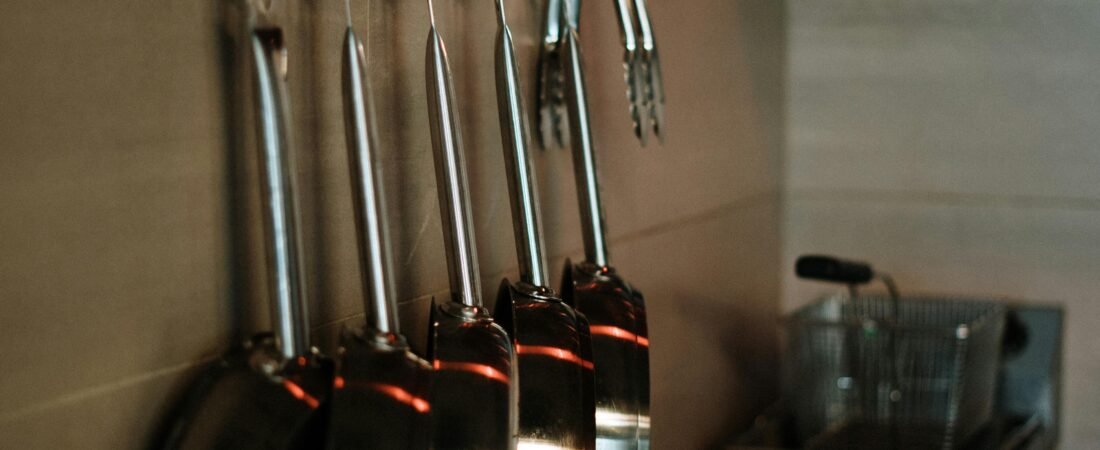
Walk down any cookware aisle and you’ll see a wall of pans that look almost identical — yet each one cooks completely differently. Why? Because cookware materials shape every meal you make, from how fast eggs slide out of the pan to whether your steak gets a real sear. Sadly, most product pages skip that part entirely.
This guide cuts through the noise. We’ll break down the seven cookware materials you’ll actually meet at the store, explain what each one does well (and badly), and recommend one solid Amazon pick per category. No jargon, no chemistry lecture — just the simple version.
The Cookware Materials Cheat Sheet
Before we dive in, here’s the entire guide compressed into one table. Skim it now, then jump to whichever material catches your eye.
| Material | Best For | Skip If… | Care Level |
|---|---|---|---|
| Stainless Steel | Sauces, browning, daily cooking | You hate scrubbing | Easy |
| Cast Iron | Steaks, cornbread, deep flavor | You can’t lift heavy pans | Medium |
| Carbon Steel | Stir-fry, omelets, restaurant-style cooking | You skip seasoning steps | Medium |
| Nonstick (PTFE) | Eggs, pancakes, easy cleanup | You crank the heat constantly | Easy |
| Ceramic | PFAS-free everyday cooking | You want a 10-year pan | Easy |
| Enameled Cast Iron | Stews, braises, no-knead bread | You drop things often | Easy |
| Copper | Precision cooking, candy, sauces | Budget matters more than control | High |
1. Stainless Steel — The Reliable Workhorse
If only one cookware material had to live in your kitchen, stainless steel would earn that spot. It handles almost every cooking job, doesn’t react with acidic foods, and basically lasts forever. You’ll find it in restaurant kitchens for good reason — chefs trust it because it builds incredible fond (those tasty browned bits at the bottom that turn into pan sauces).
The catch? Stainless isn’t naturally nonstick. Eggs will glue themselves to a cold pan faster than you can say “breakfast.” Yet once you learn the trick — preheat the pan, add fat when it shimmers, then add food — sticking stops being an issue. We’ve got a full walkthrough on how to stop food from sticking to stainless steel if you want the step-by-step.
✔ Pros: Nearly indestructible · Great for searing and sauces · Dishwasher and oven safe · Works on every cooktop including induction
✘ Cons: Steeper learning curve · Heavier than aluminum · Hot spots if not multi-ply construction
Best for: Anyone building a long-term cookware collection from scratch.
Our Pick: Cuisinart MultiClad Pro 12-Piece Set
Cuisinart’s MultiClad Pro nails the sweet spot between professional triple-ply construction and a price that won’t make you wince. The set covers every common cooking job and works on induction, gas, electric, and ceramic-glass cooktops. Plus, it’s oven safe to 500°F, which means you can sear on the stove and finish in the oven without swapping pans.
2. Cast Iron — The Heirloom Pan
Among all cookware materials, cast iron has the longest fan club — and for solid reasons. A well-seasoned cast iron skillet sears better than almost anything else in your kitchen, holds heat like a champion, and gets more nonstick the longer you use it. Grandmothers hand these pans down for generations, which says a lot about durability.
That said, cast iron has personality. It’s heavy. It rusts if you leave it wet. Acidic foods like tomato sauce will strip the seasoning if you simmer them too long. Once you learn its quirks though, you’ll wonder how you ever cooked without it. For deeper picks, check our guide to the best cast iron skillets for everyday cooking.
✔ Pros: Phenomenal heat retention · Naturally nonstick (with seasoning) · Goes from stovetop to oven to grill · Adds trace iron to your food
✘ Cons: Heavy · Requires seasoning maintenance · Reactive with acidic foods · Slow to heat up
Best for: Anyone who loves a great steak crust or wants cookware that outlives them.
Our Pick: Lodge 10.25-Inch Cast Iron Skillet (with Silicone Handle Holder)
Lodge has been forging cast iron in Tennessee since 1896, and this 10.25-inch skillet is their bestseller for a reason. Specifically, it ships pre-seasoned, so you can cook on it straight out of the box. The included red silicone handle holder solves the only real annoyance of cast iron: that searingly hot handle. Crucially, it’s induction-friendly, oven-safe to any temperature you’ll ever need, and it’ll cost you less than a fancy dinner out.
3. Carbon Steel — The Restaurant Secret
Carbon steel is what professional chefs reach for when cast iron feels too heavy and stainless feels too sticky. Think of it as the lighter cousin of cast iron with similar superpowers. Furthermore, it heats up quickly, holds heat well, and develops a slick patina with use that rivals (or beats) any synthetic nonstick coating.
French chefs have cooked on carbon steel for centuries — every classic omelet pan you’ve seen on cooking shows is almost certainly this material. The downside? You’ll need to season it and keep it dry, just like cast iron. Treat it right and one carbon steel pan can replace several others in your collection.
✔ Pros: Lighter than cast iron · Fast heat-up · Excellent searing · Becomes naturally nonstick
✘ Cons: Needs seasoning · Will rust if neglected · Reacts with acidic foods · Bare metal looks rough at first
Best for: Cooks who want pro-level results and don’t mind a little maintenance.
Our Pick: Lodge 12-Inch Pre-Seasoned Carbon Steel Skillet
Lodge does carbon steel just as well as it does cast iron — and this 12-inch skillet is the gateway pan most home cooks should start with. Notably, the heavy-gauge construction means no warping, even at high heat, and Lodge pre-seasons it before shipping so you can skip the multi-hour break-in ritual most carbon steel pans require. As a bonus, it’s induction-compatible and made in the USA.
4. Nonstick (PTFE) — The Easy Mode Pan
Nonstick (specifically the PTFE/Teflon-style coating) is the cookware material most people grew up with. It does one thing supremely well: nothing sticks to it. Eggs slide right out, pancakes flip in a single motion, and cleanup takes about 30 seconds with a sponge. For sleepy mornings, that matters.
However, the convenience comes with caveats. Nonstick coatings don’t love high heat, metal utensils ruin them, and even the best ones eventually wear out within 3 to 5 years. Modern PTFE pans are PFOA-free, so they’re considered safe at normal cooking temperatures — though some folks prefer to avoid the chemistry altogether (more on that in the ceramic section). For the full breakdown, see our deep dive on ceramic vs nonstick cookware.
✔ Pros: Effortless food release · Easy to clean · Affordable · Lightweight
✘ Cons: Not for high-heat cooking · Coating wears out · Avoid metal utensils · Not for serious searing
Best for: Eggs, pancakes, fish, and anyone who hates scrubbing.
Our Pick: T-fal Professional 12.5-Inch Nonstick Fry Pan (E93808)
This pan earned a top recommendation from Cook’s Illustrated, and it’s held that crown for years. The signature Thermo-Spot heat indicator turns red when the pan hits the right temperature — which means no more guessing. Additionally, the heavy-gauge aluminum body resists warping, and the coating is genuinely PFOA-free. For under the price of a pizza dinner, it’s the best “first nonstick pan” you can buy.
5. Ceramic — The Health-Conscious Pick
Ceramic cookware materials look like nonstick pans and behave like nonstick pans — but the coating is built from natural mineral compounds rather than synthetic polymers. That distinction matters to a growing number of cooks who want to skip PFAS, PFOA, and PTFE entirely. Bonus: ceramic pans usually come in beautiful colors that look great enough to leave on the stove.
Realistically though, ceramic doesn’t last as long as PTFE. Most ceramic pans start losing their slickness somewhere between 18 and 30 months of regular use. If health is your top priority and you don’t mind replacing pans every couple of years, the trade-off makes sense.
✔ Pros: PFAS-free coating · Beautiful colors · Easy cleanup · Quick to heat
✘ Cons: Shorter lifespan · Hand-wash recommended · Lower max heat than PTFE
Best for: Health-conscious cooks who mostly cook on low to medium heat.
Our Pick: GreenPan Lima 12-Inch Ceramic Nonstick Frypan
GreenPan basically invented the modern ceramic cookware category, and the Lima 12-inch frypan is their accessible everyday workhorse. Importantly, the Thermolon coating is free of PFAS, PFOA, lead, and cadmium, so even an overheated pan won’t release toxic fumes. The hard-anodized aluminum body resists scratches, and the stainless steel handle stays cool while you cook. Oven-safe to 600°F too, which is impressively high for a ceramic pan.
6. Enameled Cast Iron — The Slow-Cook Champion
Enameled cast iron takes everything great about regular cast iron — heat retention, even cooking, durability — and adds a glossy porcelain coating that solves all the headaches. Specifically, no seasoning required. No rust. Acidic tomato sauces can simmer all day with zero impact on the pan. This is the cookware material your favorite cooking show host probably reaches for when braising short ribs or baking sourdough.
The classic shape is a Dutch oven — a deep, lidded pot perfect for stews, soups, no-knead bread, and pretty much any low-and-slow recipe. Quality lasts decades when you don’t drop it (the enamel will chip if you do).
✔ Pros: No seasoning needed · Works with acidic foods · Beautiful at the table · Excellent heat retention · Oven-safe to 500°F
✘ Cons: Heavy · Enamel can chip if dropped · Pricier than bare cast iron
Best for: Soups, stews, braises, and Dutch oven bread bakers.
Our Pick: Lodge 6-Quart Enameled Cast Iron Dutch Oven
Le Creuset gets the spotlight, but Lodge’s enameled Dutch oven delivers nearly identical performance for roughly a quarter of the price. The 6-quart capacity comfortably handles family-sized batches of stew, chili, or no-knead bread. Furthermore, two layers of glossy porcelain enamel resist chips and stains, and the cast iron core gives you that signature even heating. Works on every cooktop, including induction, and it’s oven-safe up to 500°F.
7. Copper — The Precision Tool
Copper sits at the top of the cookware materials food chain — partly because of price, partly because nothing on Earth conducts heat faster or more evenly. Pastry chefs and saucier specialists swear by it because they can change temperature in seconds simply by lifting the pan or turning down the burner. That responsiveness matters when you’re tempering chocolate or rescuing a hollandaise.
Of course, true copper cookware is expensive, requires polishing to keep its shine, and most copper pans need an interior lining (usually tin or stainless steel) because copper itself reacts with acidic foods. Yet for one specialty pan in a serious cook’s kitchen, nothing else compares.
✔ Pros: Unmatched heat responsiveness · Stunning to look at · Becomes a kitchen heirloom
✘ Cons: Expensive · Requires polishing · Needs lined interior · Not induction-compatible
Best for: Pastry, candy, delicate sauces, and serious home cooks who want one luxury pan.
Our Pick: Mauviel M’Heritage 150 B 1.3-Quart Copper Saucepan
Mauviel has crafted copper cookware in Normandy, France, since 1830 — and this saucepan is the brand’s gateway piece. The 1.5mm copper exterior delivers professional-grade heat control, while the stainless steel interior handles every food including acidic ingredients. Brass handles add the classic French look, and the piece is genuinely heirloom-quality. Yes, the price stings, but you’re buying a pan that will outlive you.
Which Cookware Materials Should You Actually Buy?
Here’s the honest answer most articles dance around: you don’t need every cookware material on this list. In fact, three pans handle 90% of home cooking situations. Specifically, build your kitchen around:
1. A 10-inch nonstick or ceramic skillet — for eggs, pancakes, fish, and anything delicate.
2. A 12-inch stainless or cast iron skillet — for searing, sautéing, browning, and pan sauces.
3. A 6-quart Dutch oven — for soups, stews, braises, bread, and big-batch anything.
That trio covers nearly every recipe you’ll ever cook. Then, as your skills grow, add carbon steel for stir-fry or omelets, and treat yourself to copper if you fall in love with sauces. The right cookware materials for your kitchen depend on what you actually cook — not what some blog says you’re “supposed to” own. Need knives to go with your new pans? See our breakdown of the best knife sets for beginners vs pros.
Frequently Asked Questions
What cookware material is the safest?
Stainless steel, cast iron, carbon steel, and ceramic-coated pans all skip the synthetic chemistry of traditional nonstick. Among them, stainless and cast iron have the longest track record of safety. Modern PTFE nonstick is also considered safe at normal cooking temperatures, but some cooks prefer to avoid it entirely.
Which cookware material lasts the longest?
Cast iron and enameled cast iron win on longevity by a wide margin — both regularly last 50+ years and often get handed down through families. Stainless steel comes in second. Nonstick coatings (both PTFE and ceramic) wear out fastest, typically within 3 to 5 years.
Can I use one type of pan for everything?
You technically can, but you’ll fight the pan constantly. Different cookware materials excel at different jobs. A nonstick pan can sear a steak, but the result will disappoint compared to cast iron. Likewise, cast iron can scramble eggs, but cleanup gets messy. Pick the right tool for the job.
Are nonstick pans safe in 2026?
Yes, modern nonstick pans are PFOA-free and considered safe at normal cooking temperatures (below 500°F). The risks come from overheating empty pans or scratching the coating with metal utensils. If you cook with care and replace worn pans, you’re fine.
What’s the difference between cast iron and carbon steel?
Both are made from iron and need seasoning, but carbon steel contains less iron and more steel. Practically speaking, that means carbon steel is lighter, heats faster, and feels more responsive — while cast iron is heavier, holds heat longer, and gives you better long-form searing.
Is copper cookware worth the price?
For most home cooks, no. Copper shines when you need precise temperature control for delicate work like caramel, custards, or buttery sauces. If those are your weekly recipes, one copper saucepan earns its keep. Otherwise, stainless steel handles 95% of the same jobs at a fraction of the cost.
As an Amazon Associate, YourGourmetGadgets.com earns from qualifying purchases. Links on this page are affiliate links. Prices are subject to change — always confirm current pricing on Amazon before purchasing. For more cookware guidance, check out our deep-dive comparison of ceramic vs nonstick cookware and our roundup of the best cast iron skillets for everyday cooking.
Published April 20, 2026

I’m Nick F., the founder and lead tester behind Gourmet Gadgets. I’ve spent the last five years buying, using, and putting kitchen gear through its paces in my own home kitchen — from $20 vegetable choppers to high-end blenders and cast-iron skillets — and I started this site because I got tired of “best of” lists written by people who clearly never opened the box.
Cooking has been part of my daily life for much longer than five years. I’m a self-taught home cook who feeds a family, meal-preps every week, and treats the kitchen like a workshop. That hands-on routine is what shapes every recommendation here: I only write up gear after I’ve actually lived with it long enough to know what breaks, what lasts, and what’s worth your money.
Have a question or a product you’d like me to test? Get in touch via the contact page.