
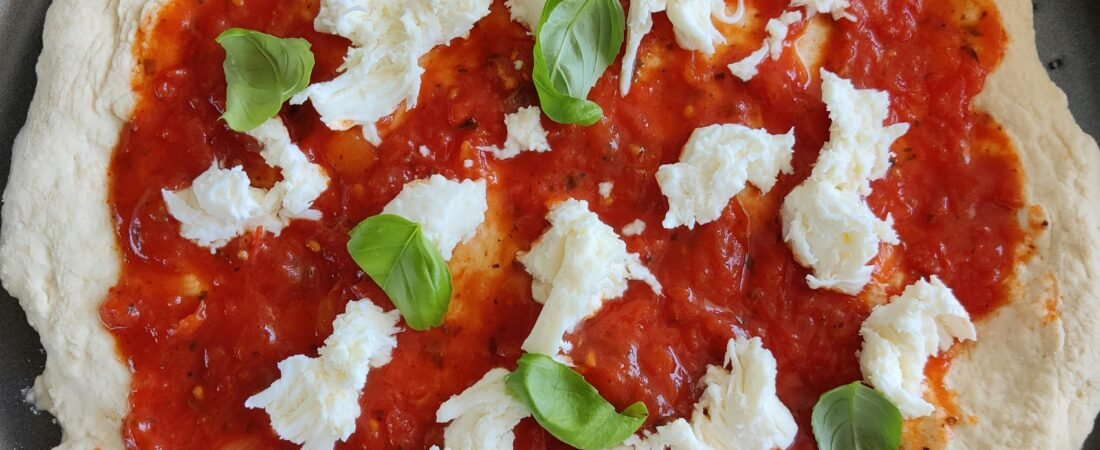
Picture this: you pull a blistered, leopard-spotted Margherita out of a screaming-hot oven on a Friday night, and somebody at the table actually says, “wait, you made this?” Truth is, most home cooks never get there because their gear quietly sabotages them — flimsy peels, lukewarm stones, dull cutters that drag toppings across the cheese. So we put together this guide to the best pizza-making tools for home kitchens, focused on hardware that genuinely earns its drawer space.
Below, you’ll find seven Amazon-verified picks that span every budget — a workhorse cordierite stone, a premium baking steel, an aluminum peel, a rocker cutter, a proofing box, an infrared thermometer, and (for the truly obsessed) a portable outdoor pizza oven. Each entry includes pros, cons, and a current affiliate link.
Why Home Pizza Beats Delivery (When You Have the Right Pizza-Making Tools)
Delivery pizza has its moments — late nights, lazy Sundays, the occasional “we didn’t plan dinner.” Yet anyone who’s bitten into a fresh-from-the-oven pie with a charred crust and bubbling mozzarella knows the difference is staggering. Homemade pizza tastes brighter, costs roughly a third as much, and lets you control every variable from hydration to cheese ratio.
So what holds people back? Mostly tools. Standard ovens cap out around 550°F, which isn’t hot enough on its own to brown a crust before the toppings dry out. That’s where the right pizza-making tools for home kitchens enter the picture — they store heat, transfer it efficiently, and give you the speed Neapolitan-style pies demand. Once your gear is dialed in, your weeknight pizza routine takes maybe 20 minutes from preheat to slice.
Quick Comparison: Best Pizza-Making Tools for Home Kitchens
| Tool | Best For | Skill Level | Price |
|---|---|---|---|
| Unicook Cordierite Pizza Stone (15×12) | Crispy crust on a budget | Beginner | $ |
| Baking Steel (14×16, ¼”) | Fastest, most even bake | Intermediate → Pro | $$$ |
| Chef Pomodoro Aluminum Pizza Peel (12″) | Launching & retrieving pies | Beginner | $ |
| Checkered Chef Rocker Pizza Cutter (14″) | Clean slices, intact toppings | Beginner | $ |
| Chef Pomodoro Dough Proofing Box (14×11) | Cold-fermented dough | Intermediate | $$ |
| Etekcity Lasergrip 1080 IR Thermometer | Stone-temp precision | All levels | $ |
| Ooni Koda 12 Gas Pizza Oven | True 60-second Neapolitan | Splurge pick | $$$$ |
1. Unicook 15×12 Cordierite Pizza Stone — The Budget Workhorse
For under $30, the Unicook 15×12-inch cordierite stone delivers the kind of crispy underside most home cooks chase for years. It’s sintered at over 2,100°F, rated heat-safe up to 1,450°F (which is hotter than any home oven can throw at it), and the porous surface wicks moisture away from your dough as it bakes — that’s the secret to a crust that crackles instead of squishes.
Where this stone shines is consistency. Once preheated for 20 minutes at 500°F, it holds enough thermal mass to keep cooking the next pie without stopping to recover. So you can run a four-pizza dinner party without a 15-minute lull between bakes. On top of that, it doubles as a bread stone for sourdough and ciabatta — handy if you’ve already gone down the home-baking rabbit hole.
One caveat: this stone has no handles, so a peel becomes essential rather than optional. Plan to buy both at once.
🛒 Check Price on Amazon✅ Pros
- Heat-safe up to 1,450°F — no thermal shock issues
- Porous cordierite draws moisture for crispy crust
- Strong sales velocity, thousands of recent reviews
- Fits 12-inch pies plus a finger of clearance
❌ Cons
- No handles — peel is mandatory, not optional
- Stains permanently with use (cosmetic only)
- Heavy at 6.8 lbs — handle with care
2. Baking Steel (14×16×¼”) — The Performance Upgrade
If a cordierite stone gets you 80% of the way there, a quarter-inch baking steel takes you the rest. The Original Baking Steel is the same slab Modernist Cuisine used to crack the home-pizza puzzle a decade ago. Steel conducts heat roughly 18 times faster than ceramic, which means your dough hits the surface and immediately gets a hard, even sear from below — the foundation of any great Neapolitan-ish pie.
Pre-seasoned and effectively unbreakable, this steel skips the fragility issues that plague cordierite. You can drop it. You can leave it on the grill. You can sear a steak on it after pizza night and the patina just gets better. Cooking times also shrink — most home pies finish in 4–6 minutes versus the 8–10 a stone needs.
Worth knowing before you commit: at 16 pounds, this thing is a workout to maneuver, and the price tag is significantly higher than a stone. Still, for anyone serious about pizza (or sourdough), it’s the closest you’ll get to commercial-deck performance in a residential oven. Want to dig deeper into how different cooking surfaces stack up? Our breakdown of cookware materials covers the science behind heat transfer in plain English.
🛒 Check Price on Amazon✅ Pros
- Conducts heat 18× faster than ceramic stones
- Pre-seasoned, naturally non-stick over time
- Doubles as stovetop griddle and sear plate
- Made in USA, virtually unbreakable
❌ Cons
- Heavy — 16 lbs requires careful handling
- Significantly pricier than cordierite stones
- Will rust if stored damp — needs occasional re-oiling
3. Chef Pomodoro 12-inch Aluminum Pizza Peel — The Launch Pad
A pizza peel sounds optional until your first dough sticks to the counter mid-launch and slides into the oven as a misshapen lump. After that, you’ll want one. The Chef Pomodoro 12-inch aluminum peel ($25-ish on Amazon) earns its spot here because it nails the three things peels usually fumble: thin leading edge, foldable handle, and a pine grip that stays cool at 500°F-plus.
Aluminum beats wood for launching, hands down. The slick surface releases dough cleanly with just a dusting of flour or semolina, and the ultra-thin front lip slides under a topped pizza without crushing the cornicione. Meanwhile, the foldable handle solves the storage problem most peels ignore — it tucks flat into a drawer or hangs on a hook, instead of dominating your countertop like a paddle for a small canoe.
One quick tip: keep a separate wooden peel for retrieval if you want to maximize results. Aluminum is great for launching, while wood handles better when pulling a finished pie out (the texture grips the crust). Yet for a single-peel setup, this aluminum one wins on versatility.
🛒 Check Price on Amazon✅ Pros
- Ultra-thin leading edge slides under any topping
- Foldable handle stores flat in a drawer
- 24″ total length keeps hands away from heat
- Works with home ovens, Ooni, kettle grills
❌ Cons
- Pine handle requires hand-washing only
- Aluminum can leave faint marks on dough — flour generously
- Single 12-inch size — won’t fit a 14″+ pie comfortably
4. Checkered Chef 14-inch Rocker Pizza Cutter — Slice Without the Drag
Wheel cutters look fine until you watch one shove pepperoni and cheese halfway across your pizza. A rocker blade fixes that with a single down-and-rock motion that sections the pie cleanly in seconds, leaving every topping where you put it. The Checkered Chef 14-inch rocker is the model that consistently sweeps best-of lists, and at well under $25 it’s also the most affordable serious upgrade in the pizza-making toolkit.
What sets this one apart is the steel itself. The blade is sharp enough out of the box to slice a sheet of paper and stays that way for years thanks to the integrated stainless construction (no separate handle joints to wiggle loose). On top of that, it tucks neatly into the included plastic sheath — a small thing that matters when you’re rooting around in a drawer for a sharp blade.
Pair it with a quality cutting board for slicing — our guide to whether expensive cutting boards are worth it covers the surfaces that won’t dull this kind of sharp blade.
🛒 Check Price on Amazon✅ Pros
- 14″ blade sections a 12″ pie in one rocking motion
- Toppings stay put — no dragging like a wheel cutter
- Dishwasher safe, fully integrated stainless
- Doubles for chopping herbs, brownies, charcuterie
❌ Cons
- Plastic sheath can be fiddly to slide on
- Long blade needs drawer space
- Heavy crust ingredients can briefly stall the blade
5. Chef Pomodoro Pizza Dough Proofing Box — For Real Cold Fermentation
Here’s the part most home pizza makers skip and later regret: the dough. A proper 24-to-72-hour cold fermentation in the fridge develops the flavor, gluten structure, and digestibility that separate “okay homemade” from “I’d pay for this.” Plastic wrap and ziplock bags work in a pinch, yet they leak air, dry out skins, and turn your fridge into a haphazard dough cemetery.
The Chef Pomodoro 14×11-inch proofing box solves all that. It fits 4–6 dough balls sized for 12-to-14-inch thin-crust pies, snaps shut to control humidity, and stacks neatly in the fridge alongside your other groceries. The transparent walls let you check rise progress without lifting the lid (which would interrupt the fermentation). Plus, it’s BPA-free and built sturdy enough for repeated use without the warping that cheap food storage develops fast.
Note: the lid isn’t fully airtight, so for very long ferments (3+ days) brush dough balls with a thin coat of olive oil to prevent skin formation. If you’re already weighing your flour for hydration consistency — and you should be — pair this with a reliable kitchen scale. We covered the why in do you actually need a kitchen scale.
🛒 Check Price on Amazon✅ Pros
- Holds 4–6 dough balls for 12–14″ thin-crust pizzas
- Stackable — saves real fridge space
- Transparent walls let you monitor rise
- Carry handle makes transport easy
❌ Cons
- Snap lid not 100% airtight — oil dough for long ferments
- Polypropylene feels lighter than commercial-grade boxes
- Single tray — no included scraper or extras
6. Etekcity Lasergrip 1080 Infrared Thermometer — The Precision Hack
Your oven thermostat is lying to you. Most home ovens swing 25–50°F off their set point, and the air temperature isn’t even what cooks your pizza — the surface temperature of the stone or steel is. That’s why an infrared thermometer like the Etekcity Lasergrip 1080 quietly transforms most pizza nights from guesswork into precision.
For roughly $25, you get a backlit LCD, instant-read response under half a second, and a temperature ceiling above 1,000°F — well past what any home oven achieves. Just point, pull the trigger, and the laser tells you whether your stone has actually reached 500°F-plus before you launch the first pie. Honestly, this single tool fixes more “why is my crust pale” complaints than any other gadget on this list.
Beyond pizza, you’ll use it constantly — checking pan temps before searing steak, verifying oil readiness for frying, even troubleshooting the freezer when something tastes off. Speaking of searing, our deep-dive on tools for the perfect steak uses this exact thermometer for skillet temps.
🛒 Check Price on Amazon✅ Pros
- Reads up to 1,130°F — plenty for any home setup
- Adjustable emissivity for different materials
- Sub-second response, backlit display
- Endless secondary uses around the kitchen
❌ Cons
- Surface only — won’t take meat internal temps
- 9V battery, not the easiest to source last-minute
- Class 2 laser — keep pointed away from eyes
7. Ooni Koda 12 Gas Pizza Oven — The Splurge That Pays Off
Granted, this one isn’t for everyone. At its price point, the Ooni Koda 12 lives in splurge territory — the same conversation as a stand mixer or espresso machine. Yet for anyone who’s serious about pizza, it’s the only tool on this list that lets a home cook hit genuine 950°F Neapolitan temperatures and bake a pie in 60 seconds flat.
What you’re paying for is heat. A standard oven tops out at 550°F, which is why home pizzas often look pale and feel chewy rather than crisp. The Koda 12 hits 950°F in 15 minutes, runs on a standard propane tank, and bakes a 12-inch pizza in roughly the time it takes to grate parmesan. Better still, it folds up in seconds and weighs about 20 pounds — easy to stash in a garage between sessions or take to a friend’s backyard.
Of course, this only makes sense if you have outdoor space. There’s no electric or indoor model in the Koda 12 line. Yet if you do have a patio or deck, it changes everything — your pizzas suddenly belong in the same conversation as your favorite local spot. While we’re talking blistering-hot cookware, our take on the best cast iron skillets covers another high-heat pan that pairs surprisingly well with this oven for sides.
🛒 Check Price on Amazon✅ Pros
- Hits 950°F in 15 minutes — true Neapolitan territory
- Cooks a 12″ pie in 60 seconds
- Folds compact, weighs only 20.4 lbs
- 5-year warranty when registered with Ooni
❌ Cons
- Outdoor use only — propane required
- Steep learning curve on dough launch and turn timing
- 12-inch ceiling on pizza diameter
How to Choose the Right Pizza-Making Tools for Your Home Kitchen
You don’t need every tool on this list. Most home pizza obsessions start with a stone and a peel — that combo runs about $50 total and dramatically improves anything you’re already making. From there, the upgrade path depends on which problem bugs you most.
Crust not crispy enough? Swap the stone for a baking steel. Slices look ragged? Add the rocker cutter. Dough tasting flat and bland? Get the proofing box and start cold-fermenting. Your stone’s surface temp a mystery? Grab the IR thermometer. Itching to crank past 550°F? That’s when the Ooni Koda 12 enters the picture — generally as a year-two or year-three investment, not day one.
One more thing worth noting: pizza prep benefits enormously from a sharp chef’s knife for slicing veggies, basil, and prosciutto. If your knife situation is shaky, our guide to the best knife sets for beginners vs pros walks through what to buy at every budget. Same goes for fresh cheese — a good microplane or grater matters more than people realize for parmesan and pecorino on top.
Frequently Asked Questions
Do I really need a pizza stone if I have a baking steel?
Nope — a steel does everything a stone does, only faster and more evenly. Stones are the budget entry point; steels are the upgrade. Most cooks pick one or the other, not both.
What temperature should my pizza stone or steel be before I launch a pizza?
Aim for 500°F surface temperature minimum, ideally 550°F. That’s why the infrared thermometer matters — your oven’s air temp doesn’t reflect the surface. Preheat at least 45 minutes for a steel, 30 for a stone.
Can I use a pizza peel without flour or semolina?
Technically yes, but you’ll regret it. A light dusting of flour, semolina, or fine cornmeal acts as ball bearings between the dough and peel. Without it, your pizza grips the surface and refuses to launch — also known as the dreaded “peel pull-back.”
Is cold fermentation worth the effort for home pizza?
Absolutely. A 24-to-72-hour cold ferment in the fridge develops complex flavor, easier-to-handle dough, and noticeably better crust texture. The proofing box just makes the process less messy and more consistent.
Are these pizza-making tools beginner-friendly?
Most of them yes — the stone, peel, cutter, and proofing box require almost no learning curve. The IR thermometer is also dead simple. The baking steel and Ooni Koda 12 reward a bit of practice, but neither is intimidating once you’ve made a few pies.
Final Thoughts: Building Your Home Pizza Setup
The best pizza-making tools for home kitchens aren’t the fanciest ones — they’re the ones that solve your specific bottleneck. For most beginners, that’s a sub-$50 stone-and-peel combo plus the rocker cutter. For intermediates, swapping in a baking steel and IR thermometer is where the real flavor jumps live. And for the truly hooked, the Ooni Koda 12 finally bridges the gap to true wood-fired-style results.
Pair these tools with a long cold ferment, quality 00 or bread flour, and good fresh mozzarella, and you’ll genuinely outdo most local delivery joints within a few sessions. If pasta night is also on your radar, our companion guide on essential tools for making homemade pasta covers the next great fresh-dough rabbit hole.
Pricing and availability change frequently on Amazon — links above are kept current and verified, but always confirm before checkout.

I’m Nick F., the founder and lead tester behind Gourmet Gadgets. I’ve spent the last five years buying, using, and putting kitchen gear through its paces in my own home kitchen — from $20 vegetable choppers to high-end blenders and cast-iron skillets — and I started this site because I got tired of “best of” lists written by people who clearly never opened the box.
Cooking has been part of my daily life for much longer than five years. I’m a self-taught home cook who feeds a family, meal-preps every week, and treats the kitchen like a workshop. That hands-on routine is what shapes every recommendation here: I only write up gear after I’ve actually lived with it long enough to know what breaks, what lasts, and what’s worth your money.
Have a question or a product you’d like me to test? Get in touch via the contact page.