
Essential Tools for Making Homemade Pasta: 7 Picks That Actually Work (2026)
Rolling out a sheet of dough on Sunday afternoon, dusting it with semolina, and watching it transform into ribbons of fresh tagliatelle — honestly, nothing beats it. Yet most beginners give up before the first batch hits the boiling water, usually because they’re missing the right gear. That’s why this guide focuses on the essential tools for making homemade pasta — the ones that actually earn their drawer space. We’ve tested racks that wobble, scrapers that bend, and stockpots that boil over, so you don’t have to.
Below, we break down seven workhorse picks: a manual machine, a tapered pin, a non-slip mat, a sturdy bench scraper, a multi-tool gnocchi set, a collapsible drying rack, and a stockpot built for a rolling boil. Each comes with a quick pros-and-cons breakdown, a current Amazon link, and notes on who it suits best.
Why Fresh Pasta Beats the Boxed Stuff (Every Single Time)
Boxed dried pasta has its place — quick weeknight dinners, pantry staples, all of that. Still, fresh pasta cooks in under three minutes, holds sauce far better thanks to its rougher surface, and tastes noticeably eggier. Once you’ve tucked into a plate of fresh pappardelle with a slow-cooked ragù, the difference becomes hard to unsee.
The catch? Fresh pasta demands a few specific tools. Yes, you can technically roll dough with a wine bottle and cut it with a butter knife — plenty of grandmothers did exactly that. However, if you’d rather avoid wrist cramps and uneven noodles, the seven items below pay for themselves within a few batches.
Quick Comparison: Essential Tools for Making Homemade Pasta
| Tool | Best For | Skill Level | Price Range |
|---|---|---|---|
| Marcato Atlas 150 Classic | Sheets, fettuccine, tagliolini | Beginner → Pro | $$$ |
| KitchenCraft Tapered Rolling Pin (50cm) | Hand-rolled sheets, ravioli | Intermediate | $ |
| Folksy Silicone Pastry Mat (28×20) | Kneading, rolling, prep | Beginner | $ |
| OXO Good Grips Bench Scraper | Cutting, portioning, cleanup | Beginner | $ |
| 11-Piece Gnocchi & Ravioli Set | Gnocchi, ravioli, garganelli | Intermediate | $$ |
| Norpro Wood Drying Rack | Drying long pasta shapes | Beginner | $ |
| Farberware 8-Qt Straining Stockpot | Boiling 1+ lb of pasta | Beginner | $$ |
1. Marcato Atlas 150 — The Gold Standard Pasta Machine
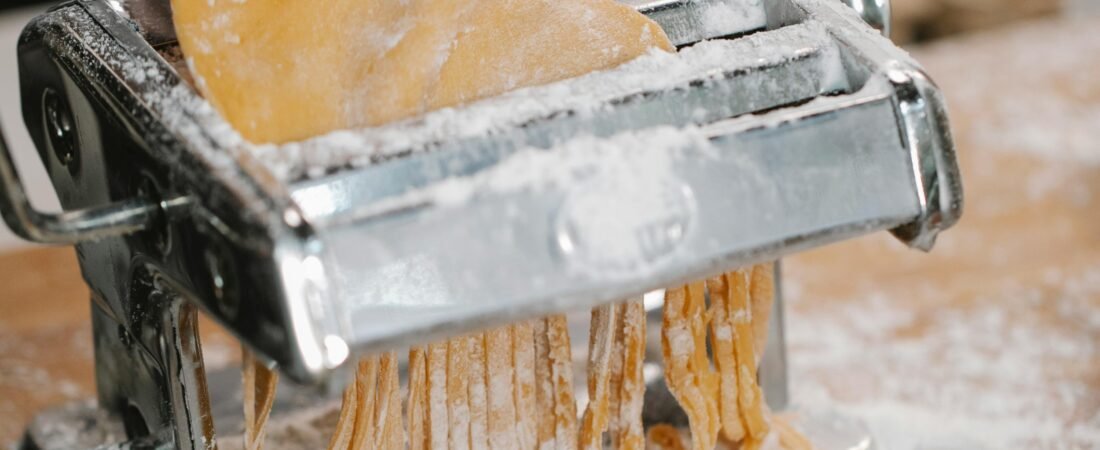
If you only buy one piece of dedicated pasta gear, make it this one. The Marcato Atlas 150 Classic is hand-cranked, made in Italy, and built from chrome-plated steel that shrugs off years of use. Its ten thickness settings let you dial in everything from delicate angel hair sheets to thick lasagna noodles, and the included cutter heads handle fettuccine and tagliolini straight out of the box.
What makes it stand out? The rollers grip the dough without slipping, the crank turns smoothly even on stiff dough, and the optional motor attachment turns it into a hands-free machine when you’re cranking out batches for a dinner party. Cleanup takes seconds — let any stuck dough dry, then brush it off.
✅ Pros
- Made in Italy, 10-year warranty
- 10 precise thickness settings
- Compatible with 12+ accessory cutters
- Best Seller status with strong sales velocity
❌ Cons
- Not dishwasher safe
- Clamp footprint requires counter overhang
- Higher upfront cost than budget machines
2. Tapered Italian Rolling Pin — For Hand-Rolled Sheets
Some Italian grandmothers refuse to touch a machine. Their secret weapon? A long, tapered mattarello-style rolling pin that lets you stretch a single sheet wide enough for a Sunday’s worth of tortellini. The KitchenCraft World of Flavours pin runs nearly 20 inches long and tapers gently at both ends, giving you precise control over thickness without bullying the dough.
Compared to American-style pins with handles, this style glides instead of grinding. You rest your palms flat and guide it back and forth, which results in a more even sheet and less arm fatigue. Beechwood is the traditional choice because the slightly porous surface helps the dough grip just enough to stretch evenly.
✅ Pros
- Single-piece beechwood, traditional style
- Tapered ends make rotating effortless
- Doubles for pizza dough and focaccia
- No moving parts to fail
❌ Cons
- Hand wash only — never the dishwasher
- Steeper learning curve than a machine
- Stock can run thin around holidays
3. Silicone Pastry Mat — Stop Fighting Your Countertop
Anyone who’s tried to roll dough on a bare granite countertop knows the pain — the dough slides, the flour goes everywhere, and somehow there’s still a sticky patch you didn’t see. A non-slip silicone pastry mat fixes all three problems at once. The Folksy Super Kitchen 28×20 mat sticks firmly to the counter, releases dough cleanly, and even prints inch-and-centimeter measurements right on the surface so you can size sheets exactly.
This particular mat runs thicker than most budget alternatives, which means it stays flat instead of curling at the edges mid-roll. After kneading, just wipe it down or toss it in the dishwasher. Plus, it doubles as a counter protector when you’re working with hot pans — a bonus if your countertops are showing their age.
✅ Pros
- Non-slip back grips counter firmly
- Printed measurements in inches and cm
- Dishwasher safe, rolls up for storage
- Handles temperatures from -30°F to 470°F
❌ Cons
- Light flour film can stain over time
- Slightly smaller than 36×24 mats
- Needs flat counter to grip properly
4. OXO Good Grips Bench Scraper — The Unsung Hero
Ask any pasta maker what tool they reach for most, and the answer probably isn’t the machine — it’s the bench scraper. This humble piece of stainless steel cuts dough into portions, scrapes flour and dough scraps off your work surface in seconds, and helps you transfer cut noodles to a tray without mangling them. The OXO Good Grips version has been a kitchen classic for two decades for good reason: the cushioned, non-slip handle stays comfortable even with floury hands, and the blade has measurement markings etched right in.
Beyond pasta, this tool earns its keep daily. You’ll use it for chopping nuts, dividing bread dough, and clearing scraps after dinner prep. Throw it in the dishwasher when you’re done. Frankly, once you’ve used one, going back to a knife feels barbaric.
✅ Pros
- Non-slip cushioned grip handle
- Etched measurement markings
- Dishwasher safe stainless steel
- Brand reliability — over 20 years on Amazon
❌ Cons
- Edge isn’t sharp enough for hard cheese
- Single size — no smaller version
- Plastic handle could feel less premium than wood
5. Gnocchi Board & Ravioli Stamp Set — Beyond Long Noodles
Once you’ve nailed fettuccine, the next adventure is shaped pasta — gnocchi with their signature ridges, plump ravioli stuffed with ricotta, and tube-shaped garganelli. Buying each tool separately gets expensive fast, which is why this 11-piece set hits a sweet spot. You get a wood gnocchi board, a ravioli rolling pin with built-in cutters, six ravioli stamp shapes (round, square, heart, and more), a fluted pasta cutter wheel, and a smooth dough roller.
The gnocchi board is the standout. Roll a small piece of dough across its grooves with your thumb, and you get those telltale ridges that catch sauce so well. Honestly, no machine replicates this — it has to be done by hand. The ravioli stamps work especially well for kids learning to cook because the shapes turn out neatly every time.
✅ Pros
- 11 pieces — covers gnocchi, ravioli, lasagna, and more
- Wood and food-grade alloy construction
- Fun for cooking with kids
- Strong value vs. buying tools separately
❌ Cons
- Hand wash only — wood warps in dishwasher
- Stamp edges may dull after heavy use
- Storage takes up a drawer
6. Norpro Wood Pasta Drying Rack — Where Your Noodles Live
Fresh pasta needs space. If you don’t dry it properly, the strands clump into a sticky mess within minutes. A wooden drying rack solves this by keeping each ribbon suspended and circulating air, which means you can prep a full batch in advance without panic. The Norpro Pasta Drying Rack stands 16.5 inches tall, with eight angled dowels arranged so even long fettuccine never touches the counter.
It assembles in seconds — the central post screws into the heavy base, then four 18-inch dowels slide through. When you’re done, the whole thing breaks down flat for storage. Rubberwood is unfinished on purpose, since varnish would make pasta strands slip off. To clean, just wipe with a damp cloth and let it air dry.
✅ Pros
- Sturdy 7/8-inch thick rubberwood base
- Eight angled dowels — no strand interference
- Disassembles flat for storage
- Food-safe, unfinished wood
❌ Cons
- Larger footprint than collapsible plastic racks
- Wood requires occasional re-tightening
- Hand wipe only, never submerge
7. Farberware 8-Quart Straining Stockpot — Boil Like You Mean It
Here’s a rule that pasta cooks ignore at their peril: your pasta needs room to swim. Crowding noodles into a small pot drops the water temperature, which leads to gummy strands that stick together. An 8-quart pot gives a full pound of pasta room to dance, and the Farberware Classic Series adds a clever twist — the lid doubles as a colander. Twist and lock it, then drain straight into the sink. No more wrestling a heavy pot of boiling water across the kitchen.
Stainless steel construction means no reactive metals leaching into your tomato sauce, and the encapsulated aluminum base distributes heat evenly so water reaches a rolling boil fast. The handles stay cool enough to grab without a towel, and yes, it’s dishwasher safe.
✅ Pros
- Built-in straining lid — no separate colander
- 8 quarts holds a full pound of pasta comfortably
- Aluminum core for fast, even heating
- Dishwasher safe and oven safe to 350°F
❌ Cons
- Lid can get hot near the strainer holes
- Heavier than aluminum competitors
- Not induction compatible on all models
How to Choose the Right Tools (Without Overspending)
Not everyone needs all seven tools on day one. If you’re brand new to pasta making, start with the bench scraper, the silicone mat, and the stockpot — together they cost under $80 and let you experiment with hand-cut shapes like pappardelle and farfalle. Once you’re hooked, add the Marcato Atlas next, since it dramatically speeds up sheet-making.
For weekend hobbyists who already love cooking, the gnocchi and ravioli set unlocks a whole new repertoire. Save the tapered rolling pin for when you want to channel your inner nonna and skip the machine entirely. As for the drying rack, it’s only essential if you’re making big batches to freeze — otherwise, a clean tea towel on the counter works fine for a single dinner’s worth.
Above all, prioritize quality over gadget count. One excellent bench scraper outperforms three flimsy ones, and a single well-made stockpot lasts decades.
Frequently Asked Questions About Tools for Making Homemade Pasta
Do I really need a pasta machine?
No, but it changes the game. Hand-rolling produces gorgeous results once you’ve practiced, yet a machine gets consistent thickness in a fraction of the time. For weekly pasta nights, a machine pays for itself fast.
Can I make pasta without a drying rack?
For a single meal, yes — just dust cut noodles with semolina and arrange them on a sheet pan. A rack only becomes essential when you’re drying batches for storage or freezing.
What’s the difference between a regular rolling pin and a tapered one?
Regular pins have handles and a uniform thickness, which works for cookies and pie crust. Tapered pins have no handles and narrow at the ends, giving you more leverage and control over thin pasta sheets. The tapered style is traditional in Italy for a reason.
Is a bench scraper really necessary?
Yes — possibly more than the machine itself. Bench scrapers cut dough cleanly, transfer cut noodles without tearing, and clean up sticky surfaces in one swipe. It’s the cheapest tool here and the most-used.
What pot size is best for pasta?
Aim for at least 6 to 8 quarts. The general rule is 4 to 6 quarts of water per pound of pasta, so an 8-quart pot gives plenty of room without overflow. Smaller pots cause sticking and uneven cooking.
Can I put wood pasta tools in the dishwasher?
Never. Heat and prolonged moisture warp wood and crack the finish. Hand wash with mild soap, dry immediately, and occasionally rub with food-grade mineral oil to keep them in shape for years.
Final Thoughts: Build Your Pasta Kit Smart
Making pasta at home isn’t about owning the fanciest gadgets — it’s about having the right tools that get out of your way and let the dough do the talking. The seven picks above represent the essential tools for making homemade pasta that actually deliver, drawn from real kitchens and real reviews rather than fluff. Start with the basics, add as your skills grow, and you’ll be turning out restaurant-quality fettuccine in a few weekends flat.
Got a favorite tool we missed? Drop us a note — we update this list as new gear earns its place. Until then, flour up your counter, crack some eggs, and get rolling.

I’m Nick F., the founder and lead tester behind Gourmet Gadgets. I’ve spent the last five years buying, using, and putting kitchen gear through its paces in my own home kitchen — from $20 vegetable choppers to high-end blenders and cast-iron skillets — and I started this site because I got tired of “best of” lists written by people who clearly never opened the box.
Cooking has been part of my daily life for much longer than five years. I’m a self-taught home cook who feeds a family, meal-preps every week, and treats the kitchen like a workshop. That hands-on routine is what shapes every recommendation here: I only write up gear after I’ve actually lived with it long enough to know what breaks, what lasts, and what’s worth your money.
Have a question or a product you’d like me to test? Get in touch via the contact page.