
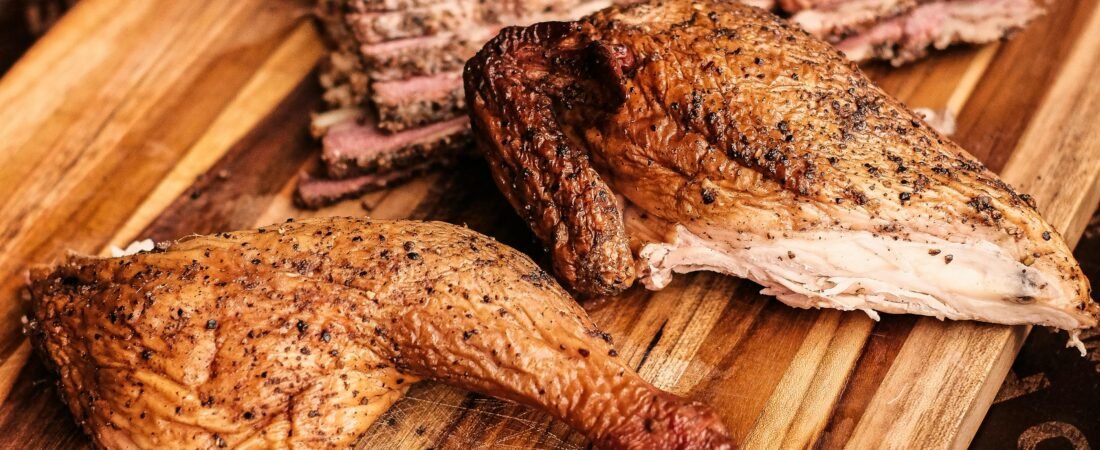
You spent good money on a beautiful brisket. You stand near the smoker for nine hours straight, lifting the lid every twenty minutes, watching the temperature crash each time you peek. By dinner, you’re tired, the bark is rubbery, and the meat finished forty minutes ago without you knowing. Sound familiar?
This is exactly the problem a wireless meat thermometer solves. But the real question isn’t whether these gadgets work, it’s whether you need one. Some cooks genuinely transform their kitchens with one. Others buy one, use it twice, and stuff it in a drawer next to the avocado slicer.
So before you spend $80 to $200 on a smart probe, let’s figure out where you actually fall. Below, we’ll walk through what these tools do, who benefits most, what to look for, and our top five picks on Amazon right now. No fluff, no upsell, just an honest take from cooks who’ve burned plenty of expensive cuts of meat.
What is a wireless meat thermometer, exactly?
A traditional probe thermometer plugs into a base unit with a cable. You drape the wire over your grill, close the lid (gently), and pray nothing pinches the cord. A wireless meat thermometer ditches the wire entirely. The probe goes inside the meat, your phone or a small base unit reads the temperature over Bluetooth or Wi-Fi, and you walk away.
Most modern wireless probes track two things at once: the internal temperature of your meat, and the ambient heat around it. That second number tells you whether your grill is actually running at the temperature you set. Spoiler: most aren’t, and that’s why your chicken keeps coming out dry.
The technology fits into three buckets:
- Bluetooth-only probes talk to your phone within roughly 100 to 165 feet of obstructed range. Cheaper, simpler, and usually fine for backyard cooks.
- Bluetooth + booster probes use a small repeater (sometimes built into the charger) to push range out to 500 or 600 feet. Good for big yards or open-fire setups.
- Wi-Fi probes connect to your home network and let you check meat temps from the grocery store, the office, or the in-laws’ house. Range is unlimited as long as both ends have internet.
Each tier costs more than the last, but the practical difference between Bluetooth and Wi-Fi only matters if you genuinely leave the property mid-cook.
Do you actually need a wireless meat thermometer?
Honest answer: it depends on how and what you cook. Let’s break it down.
You’ll get real value from one if…
- You smoke or low-and-slow cook regularly. Brisket, pork shoulder, ribs, whole turkeys — these cooks last 6 to 14 hours. Babysitting a probe wire that long is miserable. A wireless meat thermometer lets you mow the lawn, watch a game, or sleep without losing tabs on the cook.
- You cook expensive cuts often. A $60 ribeye, a $90 prime rib, a holiday turkey for twelve people. The cost of one ruined meal usually exceeds the cost of a decent thermometer.
- You’re newer to grilling and want to build confidence. Hitting medium-rare every single time without poking at the meat? That’s a real skill upgrade, and the right gadget shortcuts the learning curve.
- Your kitchen is far from your grill. Two-story house, deck off the upstairs, finished basement — wireless beats wired every time.
- You host a lot. Cooking while entertaining means juggling drinks, sides, and conversation. A phone that pings you when the pork hits 195°F is genuinely useful.
You can probably skip one if…
- You almost never cook large cuts of meat. Pan-searing a steak or roasting a single chicken? A $15 instant-read thermometer covers you fine.
- You stay near the grill anyway. Some cooks love the ritual of standing by the smoker. If that’s you, a wired probe with a base unit works just as well.
- You don’t trust your phone with cooking-critical alerts. Wi-Fi cuts out, Bluetooth disconnects, batteries die. If that frustration would make you swear off the gadget after one use, a simple analog thermometer might serve you better.
- Your budget is tight and you need other gear first. A sharp knife and an accurate instant-read should come before a smart probe. Speaking of which, our roundup on beginner cooking essentials covers the basics worth prioritizing.
Notice we’re not pushing you toward a purchase here. The wrong tool for your habits will sit in a drawer regardless of how shiny the marketing video looked.
Key features to look for in a wireless meat thermometer
Once you’ve decided you genuinely want one, these are the specs that actually matter day-to-day. Skip the hype features.
Temperature range and heat resistance
Look for an ambient rating of at least 527°F if you grill or roast. If you sear over open flame or use a kamado at 700°F+, you need a probe rated to 1000°F. Anything less will fail under that heat and the probe is toast (literally).
Number of probes
One probe handles a single cut. Two probes let you cook a steak and a chicken breast at different doneness levels. Four probes are overkill for casual cooks but a game-changer for entertaining or competition BBQ.
Range and connectivity
For 90% of home cooks, 165 feet of Bluetooth range is plenty. If your kitchen is far from your patio, or you want to leave home, pay for the Wi-Fi tier. Don’t pay for “1000ft range” specs that assume open-air, line-of-sight conditions you’ll never have.
App quality
This is where cheap thermometers fall apart. The app needs to launch reliably, push notifications when the meat hits temp, and not crash mid-cook. Read recent app store reviews — older positive reviews mean nothing if the company pushed a bad firmware update last month.
Battery life and charging
Probes that need 5 minutes of charging for 2 hours of cooking are great for spontaneous grilling. Probes that need 30+ minutes of charging are a hassle if you smoke overnight.
Cleaning
Dishwasher-safe probes save you 60 seconds of scrubbing per cook. Worth it.
Our 5 top wireless meat thermometer picks on Amazon
We chose these five based on reliability, real-world reviews, app stability, and value at each price tier. Each link goes straight to the active Amazon listing.
1. MEATER Plus — Best overall for most home cooks
The MEATER Plus is the wireless meat thermometer most cooks should buy first. It’s stupidly simple: one probe, one bamboo charging block, one app. The block doubles as a Bluetooth booster, pushing range out to 165 feet through walls. Dual sensors track meat and ambient temperature. The app guides you through doneness levels with USDA-approved temps and estimates when your food will finish.
It’s not the fanciest option here, but it’s the one we recommend to friends without hesitation.
Pros
- Truly wireless, no dangling cable
- Bamboo charger looks great on a counter
- Reliable app with cook estimator
- 5-minute charge gives 2 hours of cook time
- Dishwasher-safe probe
Cons
- Only one probe (limits multi-cook)
- Ambient max of 527°F — not for searing
- No standalone display, phone required
2. MEATER Pro — Best premium single-probe option
If you sear over open flame, run a kamado hot, or just want chef-level accuracy, the MEATER Pro upgrades the Plus across every spec. Six total sensors per probe (five internal, one ambient) give you ±0.5°F accuracy backed by a calibration certificate. Heat resistance jumps to 1000°F, so you can finally use your wireless thermometer on the grill grates instead of pulling steaks early.
It’s pricier, but if grilling is genuinely your thing, the upgrade pays for itself.
Pros
- Rated to 1000°F for open-flame searing
- Lab-calibrated to ±0.5°F accuracy
- 5 internal sensors find lowest temp automatically
- Same polished MEATER app
Cons
- Expensive for a single probe
- Charging dock not included with all bundles
- Overkill for casual roast-chicken nights
3. ThermoPro TempSpike Plus — Best dual-probe at a fair price
If you cook for more than two people regularly, the TempSpike Plus is the best balance of price, range, and capability. Two color-coded probes let you track different cuts at different doneness levels. The LCD booster shows live temps without you opening the app. Bluetooth 5.2 reaches up to 600 feet in open conditions. The probes shrug off temps up to 1050°F and have an IP67 waterproof rating, so cleanup is painless.
Honestly, this is the pick for backyard cooks who host.
Pros
- Two probes for multi-cook flexibility
- LCD booster lets you skip the phone
- 1050°F heat resistance handles searing
- Color coding makes probes easy to track
- Pre-paired out of the box
Cons
- App is functional but less polished than MEATER’s
- No Wi-Fi option, Bluetooth only
- Booster adds another thing to charge
4. CHEF iQ Sense — Best for unlimited Wi-Fi range
The CHEF iQ Sense uses a charging hub that connects to your home Wi-Fi, which means range is essentially unlimited. Drop the kids at practice, run to the grocery store, sit on the couch upstairs — you’ll still get push alerts. The hub also has a built-in speaker for audio reminders, which sounds gimmicky but actually saves you when your phone is on silent.
The ultra-thin probe leaves a smaller hole in your meat, so juices stay where they belong.
Pros
- True unlimited range over Wi-Fi
- Hub speaker delivers audio alerts
- Ultra-thin probe minimizes juice loss
- Quick charging (10 min for 40+ hours)
- Hundreds of guided recipes in the app
Cons
- Wi-Fi setup can be finicky
- Single probe in base bundle
- Account creation required to use
5. Inkbird IBBQ-4T — Best budget pick with four probes
Quick caveat: the Inkbird IBBQ-4T uses wired probes connected to a wireless base unit, so it’s not “100% wire-free” like the others. But for the price, you get four probes, Wi-Fi, a 2000mAh rechargeable battery good for 26 hours, and a magnetic back that sticks to your smoker. For competition BBQ folks or anyone running a big offset smoker with multiple cuts, it’s a hard pick to beat at this price point.
Just know what you’re buying: it’s a hybrid wired-probe / wireless-base setup, not a fully wireless probe.
Pros
- Four probes at an entry-level price
- Wi-Fi for unlimited range
- Magnetic base sticks to metal smokers
- 26-hour battery handles overnight cooks
- Color-coded probes prevent confusion
Cons
- Probes are wired (base unit is the wireless part)
- Only 2.4GHz Wi-Fi compatible
- Plastic unit max temp of 176°F (keep off the grill)
Wireless meat thermometer comparison at a glance
While you’re upgrading your kitchen…
A wireless meat thermometer pairs naturally with the rest of your prep gear. Check our guides on the best knife sets for trimming and prep, the most accurate kitchen scales for portioning, and our take on ceramic vs. nonstick cookware if you’re rebuilding from the ground up.
Frequently asked questions
Is a wireless meat thermometer worth the money?
For most regular grillers and smokers, yes. The cost of one ruined holiday roast often exceeds the price of a good thermometer. If you cook large cuts only once a year, a $15 instant-read will do the job.
Can you leave a wireless meat thermometer in the meat the whole cook?
Yes. That’s the entire point. Insert the probe before the meat goes on the grill, and pull it out only when the cook finishes. Just check the heat rating: don’t put a 527°F-rated probe directly over open flame.
Do wireless meat thermometers work in an oven?
Most do, and ovens are actually the easiest environment for them. The lower, more stable temperature plays well with battery life, and the metal box doesn’t block Bluetooth as much as people fear. Just confirm your model is rated for the temp you’re cooking at.
How accurate are wireless meat thermometers?
The good ones hit ±1°F or better against a calibrated reference. The MEATER Pro and ThermoMaven thermometers are lab-tested to ±0.5°F. Cheap models can drift 3 to 5°F over time, which matters more for chicken (food safety) than for steak.
Can I use a wireless meat thermometer for sous vide?
Yes, if the probe is fully waterproof (look for IP67 or IP68 ratings). Most of our top picks qualify. The water bath barely interferes with Bluetooth signal.
How long do the batteries last?
It depends. MEATER probes use a single AAA that lasts roughly 100 cooks. Rechargeable models like the CHEF iQ Sense and ThermoPro TempSpike give you 24 to 70 hours per charge. Either way, charge before a big cook.
Is Bluetooth or Wi-Fi better for a wireless meat thermometer?
Bluetooth is more reliable inside its range and doesn’t depend on your home network. Wi-Fi gives you unlimited range but can drop if your router has a hiccup. If you stay near the cook, Bluetooth wins. If you leave the property, Wi-Fi wins.
Final verdict: should you buy a wireless meat thermometer?
If you smoke regularly, host frequently, or cook expensive cuts more than a handful of times a year, the answer is a confident yes. The MEATER Plus is the easiest entry point, the MEATER Pro is for serious grillers, and the ThermoPro TempSpike Plus offers the best multi-probe value. The CHEF iQ Sense earns its keep if you genuinely leave the house mid-cook, and the Inkbird IBBQ-4T is the budget warrior for big-batch BBQ.
If you grill twice a summer and pan-sear the rest of the year, save your money. A solid instant-read thermometer will serve you better.
The right tool is the one that matches how you actually cook, not how you wish you cooked. Pick honestly, and you’ll never overcook a brisket again.
Prices and availability are current as of publication and subject to change.

I’m Nick F., the founder and lead tester behind Gourmet Gadgets. I’ve spent the last five years buying, using, and putting kitchen gear through its paces in my own home kitchen — from $20 vegetable choppers to high-end blenders and cast-iron skillets — and I started this site because I got tired of “best of” lists written by people who clearly never opened the box.
Cooking has been part of my daily life for much longer than five years. I’m a self-taught home cook who feeds a family, meal-preps every week, and treats the kitchen like a workshop. That hands-on routine is what shapes every recommendation here: I only write up gear after I’ve actually lived with it long enough to know what breaks, what lasts, and what’s worth your money.
Have a question or a product you’d like me to test? Get in touch via the contact page.