
⚠️ Affiliate Disclosure: YourGourmetGadgets.com is a participant in the Amazon Services LLC Associates Program. When you buy through the links below, we may earn a small commission — at zero extra cost to you. Thanks for keeping the smoker fired up!
Walk into any backyard cookout argument and you’ll hear the same showdown: pellet grill vs charcoal. One camp swears nothing beats the deep, primal char of glowing briquettes. The other points to brisket bark from a set-it-and-forget-it pellet smoker that ran flawlessly overnight. So who’s right?
Truth is, both can produce mind-blowing food — but they get there through totally different paths. Below, we’ll settle the flavor debate, explain why each method tastes the way it does, and round up six Amazon-tested picks (three pellet, three charcoal) so you can match the right grill to your weekend plans.
Jump to a section
The flavor verdict (short version)
If you only have ten seconds, here it is: charcoal delivers a more aggressive, traditional BBQ flavor with sharper char and that classic smoke ring. Pellet grills deliver a cleaner, more nuanced wood-fired taste that you can dial in flavor by flavor — hickory for ribs, applewood for chicken, mesquite for brisket.
Charcoal wins on raw, primal flavor. Pellets win on consistency, repeatability, and variety. Neither is “better” in absolute terms — they’re different tools for different cooks.
Now let’s break down what actually happens to your meat on each one.
Why charcoal tastes the way it does
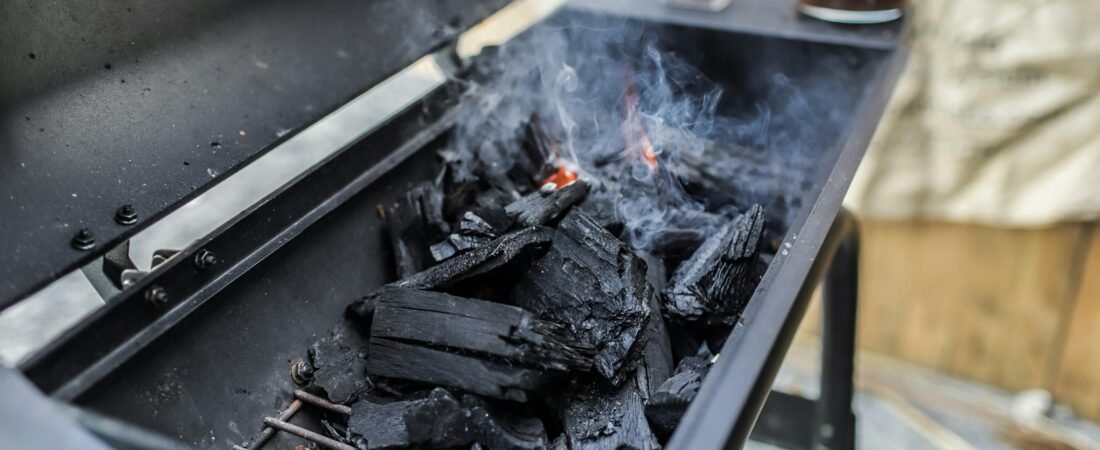
Charcoal flavor comes from three things working together: radiant heat, dripping fat, and combustion byproducts. When you sear a steak directly over hot coals, juices fall into the fire, vaporize, and rise back up as smoke that coats the meat. Pitmasters call this the “char-grill effect,” and it’s why backyard burgers taste different from anything you can produce indoors.
Lump charcoal burns hotter and cleaner than briquettes — easily hitting 700°F+ — which lets you build that crusty Maillard reaction on steaks and chops. Briquettes burn cooler and longer, which is what you want for low-and-slow ribs or pulled pork.
The downside? Charcoal demands attention. You’ll be tending vents, adding fuel mid-cook, and managing temperature swings. A 12-hour brisket on a Weber Smokey Mountain is a labor of love, not a hands-off appliance experience. But that hands-on relationship is exactly what charcoal loyalists love about it.
What charcoal nails
- Sear marks and crust: Nothing competes with 700°F radiant heat from glowing coals.
- Smoke rings: The pink, almost cured-looking ring just under the bark — charcoal builds it best.
- Bold, traditional BBQ taste: That instantly recognizable backyard cookout flavor.
- Low cost of entry: A great charcoal kettle costs a fraction of a premium pellet smoker.
Why pellet grills taste the way they do
Pellet grills are essentially convection ovens fueled by compressed hardwood. An auger feeds tiny food-grade pellets into a fire pot, an igniter rod lights them, and a fan circulates the smoke and heat around your food. You set a target temperature on a digital controller, walk away, and let the grill drive.
The flavor profile? Cleaner. Lighter. More refined. Because pellets burn with what BBQ folks call “thin blue smoke” (low-soot, complete combustion), the wood character comes through in a way that’s subtle rather than smacking you in the face. Hickory tastes like hickory. Cherry tastes like cherry. You can swap flavors mid-cook by changing pellets — try doing that with a bag of Kingsford.
The trade-off is intensity. Most pellet grills produce their best smoke at lower temps (180–225°F), so a quick weeknight burger session won’t pick up nearly as much flavor as a 10-hour pork shoulder cook. Some newer models include a “Super Smoke” or boost mode to compensate, but charcoal die-hards still argue the flavor is “polite” compared to the real thing.
What pellet grills nail
- Set-and-forget convenience: Set 225°F at 9 PM, pull a perfect brisket at 9 AM. No babysitting.
- Flavor variety: Apple, cherry, hickory, mesquite, pecan, oak — switch anytime.
- Repeatability: Same pellets + same temp = same result, every single cook.
- Versatility: Most do 6-in-1 duty — grill, smoke, bake, roast, braise, BBQ.
Side-by-side flavor comparison
Here’s how the two stack up across the categories that actually matter when you’re biting into a finished plate:
Top 3 charcoal grills on Amazon
Ready to chase that classic char flavor? These three Amazon picks cover beginners, low-and-slow specialists, and kamado fans.
1. Weber Original Kettle Premium 22″ — Best All-Around Charcoal Grill
22-inch cooking diameter | Porcelain-enameled bowl | One-Touch cleaning | 10-year warranty
The Weber Original Kettle Premium is the grill that built backyard barbecue. Six decades after its invention, it’s still the benchmark for charcoal grilling — and for good reason. The hinged cooking grate lets you add fuel mid-cook, the One-Touch ash sweep makes cleanup almost insulting in its simplicity, and the porcelain-enameled bowl holds heat like a dream.
You can sear ribeyes at 700°F, smoke ribs at 250°F using the indirect “snake method,” or bake a pizza on a stone. One grill, infinite use cases. At 13-burger capacity, it handles small parties without breaking a sweat.
✓ Pros
|
✗ Cons
|
2. Weber Smokey Mountain Cooker 18″ — Best Charcoal Smoker
481 sq. in. across 2 grates | Bullet-style design | Built-in water pan | Charcoal + wood chunks
If you’re serious about brisket, ribs, or pulled pork, the Weber Smokey Mountain Cooker (lovingly called “the WSM” by BBQ nerds) is the gold standard at this price point. Two stacked cooking grates let you smoke a whole brisket and a couple of pork butts at the same time. The water pan stabilizes temps and keeps meat moist through 12-hour cooks.
Once you dial it in, the WSM holds 225°F for 8+ hours on a single load of charcoal — without you touching a vent. It’s as close to set-and-forget as charcoal smoking gets, and the flavor it produces is the stuff of competition BBQ.
✓ Pros
|
✗ Cons
|
3. Char-Griller AKORN Kamado — Best Kamado-Style Pick
447 sq. in. cooking area | Triple-walled steel | 200–700°F range | Cast-iron grates
Want kamado-grill heat retention without dropping $1,500 on a Big Green Egg? The Char-Griller AKORN Kamado uses triple-walled steel (instead of heavy ceramic) to lock in heat and moisture, hitting 700°F for searing and dropping to 200°F for low-and-slow without breaking stride.
The locking lid, indexed dual dampers, and easy-dump ash pan make temp control surprisingly forgiving for a kamado. Use less charcoal than a kettle, get juicier results from the insulated chamber, and pivot from steaks to overnight pork shoulder using the same grill.
✓ Pros
|
✗ Cons
|
Top 3 pellet grills on Amazon
If hands-off, repeatable wood-fired flavor sounds like your speed, these three pellet grills earn their keep at every price tier.
4. Traeger Pro 575 — Best Overall Pellet Grill
575 sq. in. | 500°F max | WiFIRE app control | Meat probe included
The Traeger Pro 575 is the bestselling pellet grill in the world, and once you cook on one, you’ll get why. The D2 Direct Drive system fires up fast and recovers temperature quickly when you open the lid. WiFIRE technology lets you monitor and adjust the cook from your phone — perfect when you’re running errands during a 10-hour brisket.
Five hundred seventy-five square inches fits five rib racks or four whole chickens with room to spare. The 18-pound hopper supports overnight smokes, and the included meat probe nails internal temps without lid-lifting. Traeger’s pellets (Signature Blend, mesquite, hickory, etc.) are widely available and consistent batch to batch.
✓ Pros
|
✗ Cons
|
5. Pit Boss Pro Series 850 — Best for Searing
850 sq. in. | Slide-Plate Flame Broiler hits 1,000°F | 8-in-1 cooking | 5-year warranty
The Pit Boss Pro Series 850 tackles the one big knock against pellet grills: weak searing. Its patented Slide-Plate Flame Broiler lets you expose meat directly to flame for searing up to 1,000°F — basically charcoal-level heat with pellet convenience. Slide it back, and you’re running a normal indirect smoker again.
You also get 850 square inches of cooking space (massive), porcelain-coated cast-iron grates, and Pit Boss’s class-leading 5-year warranty. If you want one grill that handles both sides of the pellet grill vs charcoal debate — low-and-slow and screaming-hot steaks — this is the closest thing on the market.
✓ Pros
|
✗ Cons
|
6. Z Grills 700D4E — Best Budget Pellet Grill
697 sq. in. | PID controller (±5°F) | WiFi + Bluetooth | Bottom storage cabinet
The Z Grills 700D4E proves you don’t need to spend Traeger money to get serious pellet performance. The PID 3.1 controller holds set temp within 5°F all day, the dual-wall insulated bottom keeps heat steady in cold weather, and the enclosed cabinet underneath stores pellet bags and tools out of the rain.
You also get 697 square inches of grilling space — that’s 122 more than the Traeger Pro 575 — plus two meat probes and a hopper cleanout door for easy pellet swaps. For roughly two-thirds the price of the Traeger, you get nearly the same results. The only real compromises are app polish and brand resale value.
✓ Pros
|
✗ Cons
|
Which one should you actually buy?
Here’s the honest decision tree we’d use if a friend asked us:
Buy charcoal if…
- You love the process of grilling — managing fire, smelling smoke, tending coals.
- You crave that classic, aggressive BBQ flavor over subtlety.
- You mostly cook steaks, burgers, and weekend cookout food.
- Budget matters and you want maximum bang for your buck.
- You want a grill that lasts 20+ years with zero electronics to fail.
Pair a great kettle with the right tools, and you’ll cook food worth bragging about. We cover the supporting cast in our guide on tools to make the perfect steak every time.
Buy a pellet grill if…
- You want long, hands-off cooks (brisket, pork shoulder, overnight smokes).
- Repeatable, dial-in-able results matter more than maximum flavor punch.
- You like the idea of a grill that also bakes pizza, roasts a turkey, and braises short ribs.
- You’re short on time and don’t want to babysit a fire on weeknights.
- You enjoy experimenting with different wood pellet flavors.
Get both if…
- You really, really love BBQ. (No shame here.) A pellet grill for weeknight ease and a charcoal kettle for weekend showmanship is the ultimate combo.
5 tips to squeeze more flavor out of either grill
Whichever side of the pellet grill vs charcoal debate you land on, these moves will dial up the flavor on the food coming off your grates:
- Dry-brine 24 hours ahead. Salt your steaks and roasts a day before cooking. Dry surfaces sear better and develop deeper flavor.
- Toss wood chunks on charcoal. A couple of fist-sized hickory or oak chunks transform a charcoal kettle into a smoke machine — closes the gap with pellet grills fast.
- Run pellet grills low first, then crank up. Smoke at 180–225°F for the first hour to maximize wood flavor, then bump up to finish. This trick alone changes the game.
- Reverse-sear thick steaks. Smoke at 225°F until the steak hits 115°F internal, then sear hard over direct heat. Works on either grill.
- Rest your meat properly. Pull thick cuts 5–10°F before target temp and let them rest 10–20 minutes. Carryover cooking finishes the job and locks in juice.
For more setup ideas, our guides on the best cast iron skillets and starting a kitchen from scratch pair perfectly with backyard grilling.
Frequently asked questions
Does a pellet grill or charcoal grill give better flavor?
Charcoal grills produce a stronger, more traditional BBQ flavor with a deeper smoke ring and harder sear. Pellet grills produce a cleaner, more refined wood-fired flavor with greater variety and consistency. For competition-style brisket, charcoal traditionally wins. For weeknight convenience and reliable results, pellet grills are the better tool.
Can a pellet grill replace a charcoal grill?
For most home cooks, yes. A pellet grill can grill, smoke, bake, roast, and BBQ on a single appliance. The main thing it can’t fully replicate is the 700°F+ direct sear of a charcoal grill — though models with flame-broiler features (like the Pit Boss 850) get very close.
Are pellet grills healthier than charcoal grills?
Slightly, yes. Pellet grills produce more complete combustion (“thin blue smoke”) and fewer polycyclic aromatic hydrocarbons (PAHs) than charcoal grills, especially when fat dripping causes flare-ups. That said, both methods are safe when you avoid charring food and grill at moderate temperatures.
How long do pellet grills last compared to charcoal grills?
A quality charcoal grill (like a Weber kettle) easily lasts 15–20 years with basic care. Pellet grills typically last 5–10 years before electronic components like the auger motor or controller may need replacement. Charcoal grills win on raw longevity, while pellet grills win on convenience.
Is a pellet grill cheaper to run than a charcoal grill?
Charcoal is usually cheaper per cook — a $20 bag of briquettes lasts 4–6 cooks. Pellets cost $20–$25 per 20-pound bag and you’ll burn 1–2 pounds per hour during a smoke. For long cooks, pellet grills can actually use more fuel by weight, but the convenience is worth it for many cooks.
Do pellet grills produce a smoke ring?
Yes, but typically a lighter one than charcoal grills. Smoke rings come from nitrogen dioxide reacting with myoglobin in meat. Charcoal produces more NO₂, which is why kettle and offset cooks show those deep pink rings. Pellet grills produce a thinner ring — but flavor-wise, the difference is minimal.
The bottom line
Settling the pellet grill vs charcoal flavor debate isn’t about picking a winner — it’s about picking the right tool for how you like to cook. Charcoal rewards patience and gives you the boldest, most traditional BBQ flavor on the market. Pellet grills reward modern conveniences with restaurant-grade consistency and the most flavor variety you can ask for.
If you want classic char-grill flavor and you don’t mind tending a fire, grab the Weber Original Kettle. If you want hands-off, repeatable wood-fired magic, the Traeger Pro 575 is the safest bet. And if budget’s tight, the Z Grills 700D4E punches way above its weight.
Whichever you pick, your backyard cookouts are about to get a whole lot more interesting.
Looking for more outdoor-cooking upgrades? Browse our kitchen guides and best picks for tools that make every cook easier.
Affiliate Disclosure: As an Amazon Associate, yourgourmetgadgets.com earns from qualifying purchases. Product prices and availability are accurate as of the date of publication and are subject to change. Any price and availability information displayed on Amazon at the time of purchase will apply to the purchase of this product.

I’m Nick F., the founder and lead tester behind Gourmet Gadgets. I’ve spent the last five years buying, using, and putting kitchen gear through its paces in my own home kitchen — from $20 vegetable choppers to high-end blenders and cast-iron skillets — and I started this site because I got tired of “best of” lists written by people who clearly never opened the box.
Cooking has been part of my daily life for much longer than five years. I’m a self-taught home cook who feeds a family, meal-preps every week, and treats the kitchen like a workshop. That hands-on routine is what shapes every recommendation here: I only write up gear after I’ve actually lived with it long enough to know what breaks, what lasts, and what’s worth your money.
Have a question or a product you’d like me to test? Get in touch via the contact page.